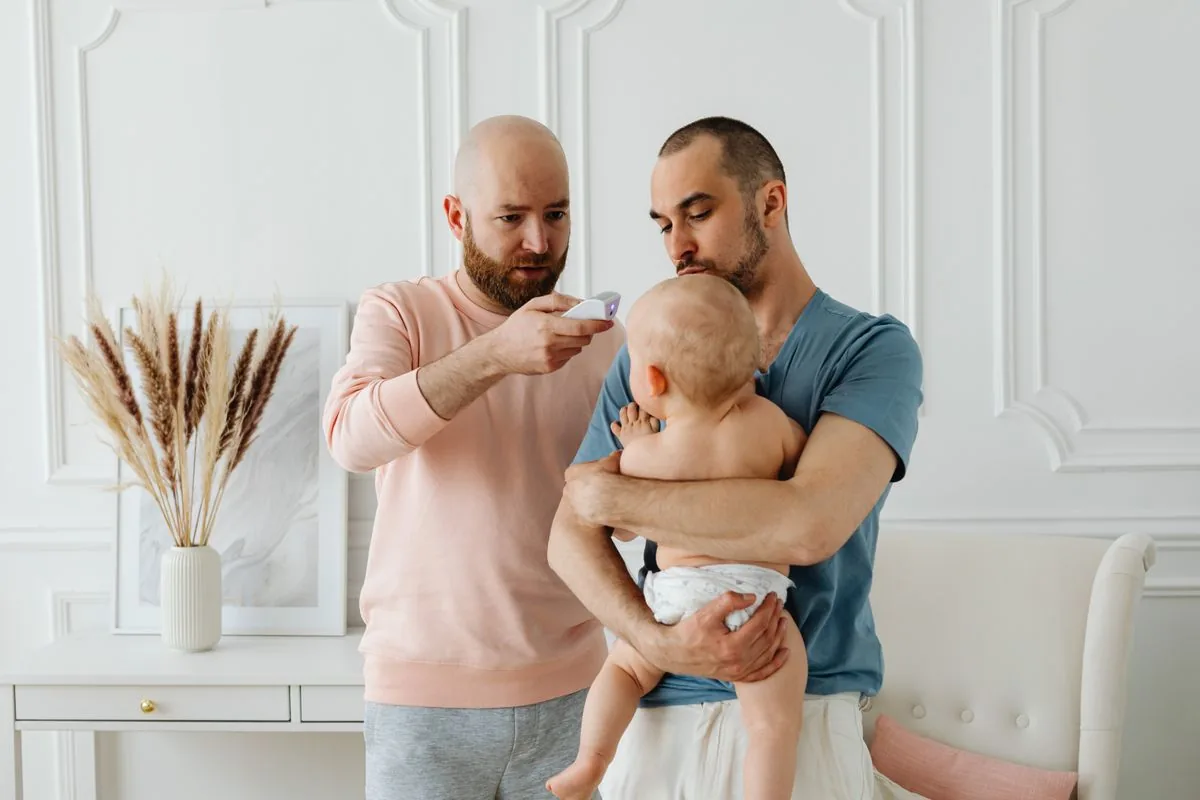
It nearly always starts the same way: a runny nose, a bit of a cough, a slightly raised temperature. It looks like just another cold. Around the second or third day, though, in some babies the cough gets worse, breathing speeds up and feeds are left half finished. That is no longer a head cold: it is bronchiolitis, the infection of the smallest airways that fills paediatric clinics every winter.
The season runs roughly from November to March, so now is the time to know what to look for. We go through how bronchiolitis in babies develops day by day, which signs mean a trip to A&E, what really helps at home and what does not, and how nirsevimab works, the antibody against respiratory syncytial virus (RSV) that the Catalan health service offers every baby during their first season.
In this article
The essentials in one minute
- Bronchiolitis is a viral infection of the bronchioles that affects children under 2, especially in the first year of life. RSV is the virus that causes it most often.
- It starts like a cold. Days three to five are usually the worst, most babies recover in one or two weeks and the cough can last up to three.
- Go to A&E if your baby breathes very fast or with a lot of effort, pauses while breathing, turns bluish, refuses feeds or wets very few nappies.
- No medicine cures it: not antibiotics, not cough syrups, not mucolytics, not corticosteroids and not salbutamol.
- At home, saline nose drops, smaller and more frequent feeds, keeping the baby upright and a smoke-free home all help.
- Nirsevimab protects from day one for about five months. In Catalonia it is offered to every baby born between April 2026 and March 2027.
What bronchiolitis is
Acute bronchiolitis is an infection of the bronchioles, the narrowest tubes in the lungs, which carry air from the bronchi to the alveoli. When a virus inflames them, they fill with mucus and air moves in and out with difficulty. That is why the baby breathes faster and you can sometimes hear a whistle or a crackle in the chest.
It affects children under 2, mostly in their first year. The British NICE guideline puts the peak between 3 and 6 months. At that age the airways are so narrow that a little swelling and mucus are enough to make breathing hard, and a baby cannot yet blow their nose.
RSV, the virus behind most cases of bronchiolitis
The most common cause is respiratory syncytial virus, known as RSV. Flu viruses, common cold viruses and other less frequent ones can also cause it. According to the Public Health Agency of Catalonia, RSV is responsible for 60% to 70% of bronchiolitis cases and one in four pneumonias in young children. And it is so common that almost every child catches it before the age of two: about 9 in 10, according to Canal Salut, the Catalan health portal.
Worldwide, the World Health Organization estimates that RSV causes about 3.6 million hospital admissions and some 100,000 deaths in children under 5 every year, half of them in babies under 6 months. Almost all of these deaths (97%) happen in low- and middle-income countries, where access to oxygen and hospitals is limited. With good care, the risk of dying from bronchiolitis is low even in children who are admitted, but admissions are many: every winter RSV is the leading cause of hospital admission for respiratory infection in children under two.
Why now: bronchiolitis season
RSV circulates mainly in autumn and winter. Canal Salut places the season roughly between November and March, and the Public Health Agency describes a pattern running from October to February or March. Since the pandemic the calendar has shifted in some years and there have been outbreaks out of season, so the month on its own is not a reliable guide.
Symptoms of bronchiolitis in babies, day by day
Bronchiolitis almost never starts suddenly. For the first two or three days it looks like a cold: a runny nose, a blocked nose, a dry cough and sometimes a temperature that is not very high. Some babies go no further.
In others, the infection moves down to the bronchioles. The cough becomes more frequent, breathing speeds up and wheezing or crackles appear, sounds you can sometimes hear without a stethoscope. With so much effort going into breathing, feeding becomes hard: the baby takes short feeds, gets tired, gets upset or vomits after a coughing fit.
The worst point usually comes between the third and fifth day. After that, most babies improve little by little. Canal Salut describes an illness lasting 7 to 10 days, although the cough can last two or three weeks, and NICE notes that the cough clears within three weeks in 90% of babies.
Very young babies: pauses can be the first symptom
In babies only a few weeks old, especially if they were born prematurely, bronchiolitis can start with apnoea, that is, pauses in breathing, with hardly any other symptom. NICE highlights this for babies under 6 weeks. That is why, in a baby this young, any pause in breathing, change of colour or refusal to feed should be checked the same day.
Bronchiolitis, a cold or bronchitis?
In a cold the infection stays in the nose and throat: there is mucus and a cough, but the baby breathes at their usual pace. In bronchiolitis the infection reaches the bronchioles and changes the way the baby breathes. Bronchitis is something else: it affects larger airways, causes a cough with a lot of mucus and can happen at any age.
Warning signs: when to take your baby to A&E
Most cases of bronchiolitis are mild and get better at home. What you need to watch is breathing, feeding, skin colour and how the baby seems in general. Mild symptoms can become serious within a few hours, so if you notice any of these signs, do not wait for an appointment:
Go to A&E (urgencias) or call 112 if your baby:
- is breathing very fast, or worse and worse;
- is working hard to breathe: the chest sinks in between or below the ribs, the tummy moves a lot, the nostrils flare or they grunt with each breath;
- has pauses in breathing, or their lips, tongue or skin turn bluish;
- is very drowsy and hard to wake, or very irritable and cannot be settled;
- refuses feeds, takes much less than usual or vomits what they take;
- wets very few nappies or has a dry mouth and tongue;
- has a very high temperature, or is under 3 months old and has a temperature of 38 °C or more.
Nappies are a very useful clue: if 12 hours go by without a wet one, get help straight away, because your baby may be getting dehydrated. If you are unsure whether to go to A&E, Catalonia's 061 Salut Respon line can advise you over the phone.
Which babies are at higher risk of severe bronchiolitis
Any baby can get worse, but the risk is higher in:
- babies under 3 months;
- babies born prematurely, especially before 32 weeks;
- babies with congenital heart disease, chronic lung disease, neuromuscular conditions or a weak immune system;
- babies exposed to tobacco smoke at home;
- babies who are not breastfed;
- babies who go to nursery or have brothers or sisters at school, because they are more exposed.
For these babies it is worth seeking advice earlier and with fewer symptoms.
How it is diagnosed at the clinic
Bronchiolitis is diagnosed clinically. The paediatrician asks how it started, watches how the baby breathes, counts the breaths per minute, looks for recession (the ribs showing with each breath) and listens to the lungs with a stethoscope. To judge whether it is mild or not, they measure oxygen saturation with a pulse oximeter, a clip that goes on a finger and does not hurt.
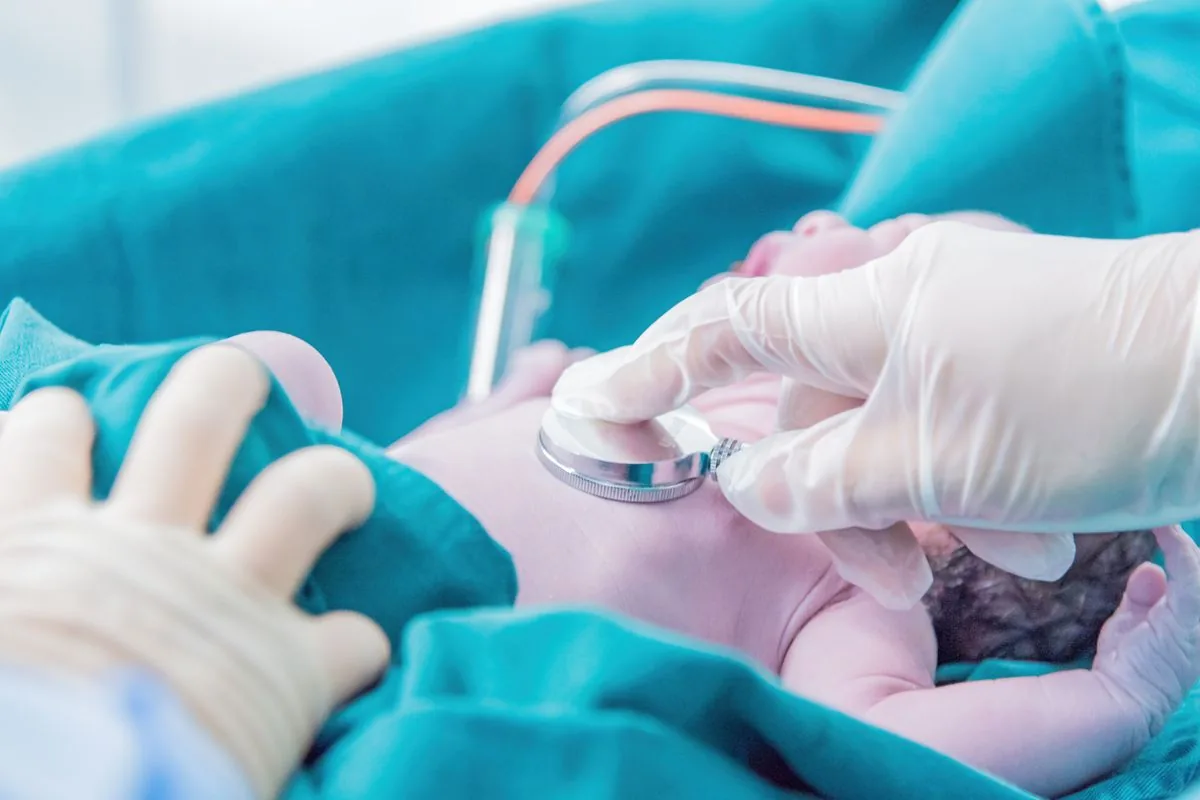
Sometimes a sample of nasal mucus is tested to find out which virus is causing it. Chest X-rays and blood tests are not done routinely: NICE advises against them because the X-ray picture of bronchiolitis can be mistaken for pneumonia and lead to antibiotics that are not needed. They are kept for cases where there is doubt, a sudden worsening or a severe illness.
Pulse oximetry: the most useful number (and its limits)
Saturation shows how much oxygen the blood is carrying. In the NICE guideline, a saturation that stays below 92% while breathing air is a reason to consider referral to hospital. For admission and oxygen, the reference figure for babies over 6 weeks is 90%, while 92% is kept for babies under 6 weeks or with other health conditions. But the number is not read on its own: the paediatrician combines it with the effort of breathing, feeding and the baby's general state.
Measuring it properly in a wriggling baby is not easy, and NICE itself warns that readings outside hospital may be less accurate. If you have a pulse oximeter at home, do not let a normal reading stop you going to A&E if you see warning signs.
Treating bronchiolitis: what helps at home
No medicine cures bronchiolitis. Treatment means helping the baby breathe and feed while their body fights off the virus. This is what Canal Salut, the Spanish Society of Paediatric Emergency Medicine and the NHS recommend:
- Saline nose drops or washes, especially before feeds and before sleep. With a blocked nose, it is hard to feed and breathe at the same time.
- Smaller, more frequent feeds, so the baby does not get exhausted and stays hydrated. If you are breastfeeding, carry on.
- A semi-upright position, for example in your arms while the baby is awake. For sleep, on their back, with no cushions or soft objects in the cot.
- A fever-reducing medicine if they have a temperature and are uncomfortable, at the dose for their weight. No aspirin for children.
- No tobacco smoke near the baby, including in the car.
- Check on your baby often, including at night.
Suctioning mucus is not done routinely: NICE keeps it for when mucus makes it hard for the baby to breathe or feed. If you are not sure how to do the nose washes, ask us to show you at the clinic.
And if someone at home smokes, now is a good time to stop: smoke makes bronchiolitis symptoms worse, and at Clínica Eupnea we run a smoking cessation programme to help you.
When a baby is admitted and what happens in hospital
Babies are admitted when they need oxygen, cannot take enough fluid or have apnoeas. In hospital they are given oxygen and, if they are not feeding, fluids through a tube or a drip. Treatment is still supportive: helping while the body beats the virus.
What does not work
It is natural to want to give your baby something. But none of these treatments has been shown to help in typical bronchiolitis, and some have side effects:
- Antibiotics: bronchiolitis is caused by a virus. They are only used if a bacterial infection develops on top of it.
- Cough syrups and mucolytics.
- Corticosteroids, whether inhaled or by mouth.
- Bronchodilators such as salbutamol, which have not been shown to improve the course of the illness. NICE also advises against nebulised adrenaline, hypertonic saline and montelukast.
If your paediatrician has prescribed any of these medicines for another reason, do not stop them without talking to them first.
What about chest physiotherapy?
It is one of the most common questions. Current guidelines do not recommend it routinely in acute bronchiolitis: the British NICE advises against it in babies without another underlying condition and keeps it for cases such as spinal muscular atrophy or severe tracheomalacia, where the baby finds it harder to clear secretions.
A 2023 Cochrane review of 17 trials and 1,679 babies found that the classic techniques (clapping, vibration and postural drainage) and the forced expiratory techniques do not improve the course of the illness, and that the latter can cause significant side effects. Gentle slow expiratory techniques showed a mild to moderate improvement in babies admitted with moderate bronchiolitis, based on low-quality evidence. So it is not a treatment for every baby: if it is considered, the paediatrician prescribes it and a physiotherapist experienced with infants carries it out.
How to protect your baby from RSV: nirsevimab and everyday habits
The most effective way to prevent bronchiolitis is to protect the baby against RSV, the virus responsible for most cases. Since the 2023-2024 season, Catalonia has done this with nirsevimab, a monoclonal antibody sold under the name Beyfortus.
What nirsevimab is and why it is not a vaccine
A vaccine teaches the body to make its own defences and takes a few weeks to protect. Nirsevimab works differently: it gives the baby ready-made antibodies, so it protects from the first day, but only for a while, about five months, which is how long the season lasts. It is given as a single injection in the thigh, with a dose based on weight, and can be given on the same day as routine vaccines. There is currently no RSV vaccine authorised for babies.
It is safe. Side effects are usually mild: a skin rash, a temperature or pain where the injection was given.
RSV immunisation in Catalonia, 2026-2027 season
The Catalan Department of Health has bought 57,500 doses for this season, the fourth of the programme. According to Canal Salut, the antibody is offered to babies who have not yet had the infection:
- born between April and August 2026: at the CAP (primary care centre), from 1 September;
- born between September 2026 and March 2027: in hospital, before they go home.
Children up to 24 months at high risk, such as some with heart disease, chronic lung disease or a weak immune system, can also receive it at the start of their second season. If your baby was born between April and August and has not had it yet, ask at your CAP.
It works. In Catalonia, a study of 26,525 babies born between April and September 2023, published in Archives of Disease in Childhood in 2024, compared those who received the antibody with those who did not: the risk of hospital admission for RSV bronchiolitis was 87.6% lower, the risk of ending up in intensive care 90.1% lower, and the risk of an A&E visit for bronchiolitis less than half.
In France, Santé publique France and the Institut Pasteur estimated a real-world effectiveness of between 76% and 81% against RSV bronchiolitis cases admitted to intensive care.
The WHO also provides for a vaccine given in the third trimester of pregnancy, which passes antibodies to the baby through the placenta and protects them for about six months. It is an alternative to the antibody; the programme the Catalan Department of Health describes for this season is the nirsevimab one.
Habits that cut the spread
RSV spreads through the droplets released when people cough, sneeze or talk, and through hands and objects: touching a contaminated surface and then your eyes, nose or mouth is enough. These measures slow it down:
- washing hands for 30 seconds with soap and water, especially before picking the baby up or feeding them and after changing a nappy;
- wearing a mask to look after the baby if you have a cold;
- not letting people with a cough, runny nose or fever hold or kiss the baby;
- avoiding shopping centres, public transport and other crowded indoor spaces during the season;
- not sharing unwashed bottles, dummies or cutlery, and cleaning the baby's toys well;
- airing the baby's room and the house for at least 10 minutes a day;
- a smoke-free home and car;
- breastfeeding, which helps protect the baby against these infections.
What about nursery? The Spanish Society of Paediatric Emergency Medicine recommends keeping the baby at home while they have acute bronchiolitis, because they can pass it on. When they can go back depends on how they recover: ask their paediatrician.
Another layer of protection this winter is the flu vaccine, which in Catalonia is offered to children aged 6 to 59 months. We explain it in our article on the 2026-2027 flu vaccine.
After bronchiolitis: the lingering cough and wheezing that comes back
A cough that lasts two or three weeks is normal and does not mean the baby is still ill. Get them checked if the cough gets worse instead of better, if the fever comes back or if their breathing speeds up again.
Some children who have had bronchiolitis, especially if they were admitted, are later prone to repeated bronchitis. Many young children wheeze only when they catch a virus and grow out of it; others carry on. If the wheezing keeps coming back, the paediatrician will assess whether it could be asthma. We explain this in our article on childhood asthma and the return to school.
At Clínica Eupnea, these children are followed up by the paediatrics team, with support from pulmonology and allergology when needed, and with lung function tests once the child is old enough to do them.
Myths worth forgetting
"A cough syrup will ease it." Cough syrups and mucolytics should not be given in bronchiolitis: they do not help and can have side effects.
"The inhaler will open up the airways." In asthma, yes. In bronchiolitis, the problem is inflammation and mucus in the bronchioles, and salbutamol has not been shown to improve the course of the illness.
"No fever means it is nothing." Fever is common but not always there, and in the youngest babies bronchiolitis can start with pauses in breathing. What matters is how the baby breathes and feeds.
"Nirsevimab is just another vaccine and takes time to work." It is an antibody: it protects from the first day, for about five months.
How we help at Clínica Eupnea
In Palamós, our paediatrics clinic is run by Dr Montse Vazquez. If your baby has a runny nose and a cough and you are not sure whether it is a cold or bronchiolitis, at the clinic we:
- assess how your baby breathes, listen to their chest and measure their saturation with pulse oximetry;
- if needed, carry out a rapid test to see whether the virus is RSV or flu;
- show you how to do the nose washes and how to organise feeds;
- explain which signs to watch for at home and when to come back;
- provide follow-up if the wheezing keeps coming back, with support from pulmonology, allergology and respiratory physiotherapy when the paediatrician considers it appropriate.
Our clinic is not an emergency service: if you see warning signs, go to A&E or call 112.
Paediatrician in Palamós for bronchiolitis
Book an appointment on 872 21 75 91 or by WhatsApp, Monday to Friday from 9.00 to 13.30 and from 15.30 to 19.30, at Passeig del Mar, 41, Palamós. You can also bring your child for well-child check-ups; you will find more information in our article on paediatric check-ups.
Frequently asked questions
It usually lasts 7 to 10 days, and the worst point tends to come between the third and fifth day. The cough can go on for 2 or 3 weeks: according to the British NICE guideline, it clears within 3 weeks in 90% of babies. If your baby is getting worse instead of better, get them checked.
Yes. The viruses that cause it, above all RSV, spread through the droplets released when someone coughs or sneezes and through hands and objects. That is why a baby with acute bronchiolitis should stay away from nursery, hands should be washed often and dummies, bottles and cutlery should not be shared.
If they breathe very fast or with a lot of effort (the chest sinks in, the tummy moves a lot, they grunt), if they pause while breathing or turn bluish, if they are very drowsy or very irritable, if they refuse feeds or wet very few nappies, and if they have a very high temperature, or are under 3 months old with 38 °C or more.
Usually not. Bronchiolitis is caused by a virus, so antibiotics are only used if a bacterial infection develops on top of it. Inhalers such as salbutamol, corticosteroids, cough syrups and mucolytics have not been shown to help. What does help is saline nose drops, smaller and more frequent feeds and keeping the baby upright.
It is a monoclonal antibody against RSV that protects the baby from day one for about 5 months, with a single injection. In the 2026-2027 season it is offered to babies born between April and August 2026 at the CAP, from 1 September, and to babies born between September 2026 and March 2027 in hospital before they go home. High-risk children can receive it up to 24 months of age.
It is not recommended routinely. According to a 2023 Cochrane review, the classic techniques of clapping and vibration and the forced expiratory techniques do not improve the course of the illness, and the NICE guideline keeps it for babies with conditions that make it hard to clear secretions. Gentle slow expiratory techniques might help some babies with moderate bronchiolitis; if it is considered, the paediatrician decides.
In most babies, no: they recover in one or two weeks. Some, especially those who were admitted to hospital, are later prone to repeated bronchitis or wheezing. If your baby wheezes every time they catch a cold, the paediatrician should follow them up to assess whether it could be asthma.
Does your baby have a runny nose and a cough, and you are not sure if it is bronchiolitis?
At Clínica Eupnea in Palamós, our paediatrician examines your baby, measures their oxygen saturation and explains what to watch for at home and when to come back.
Book an Appointment