
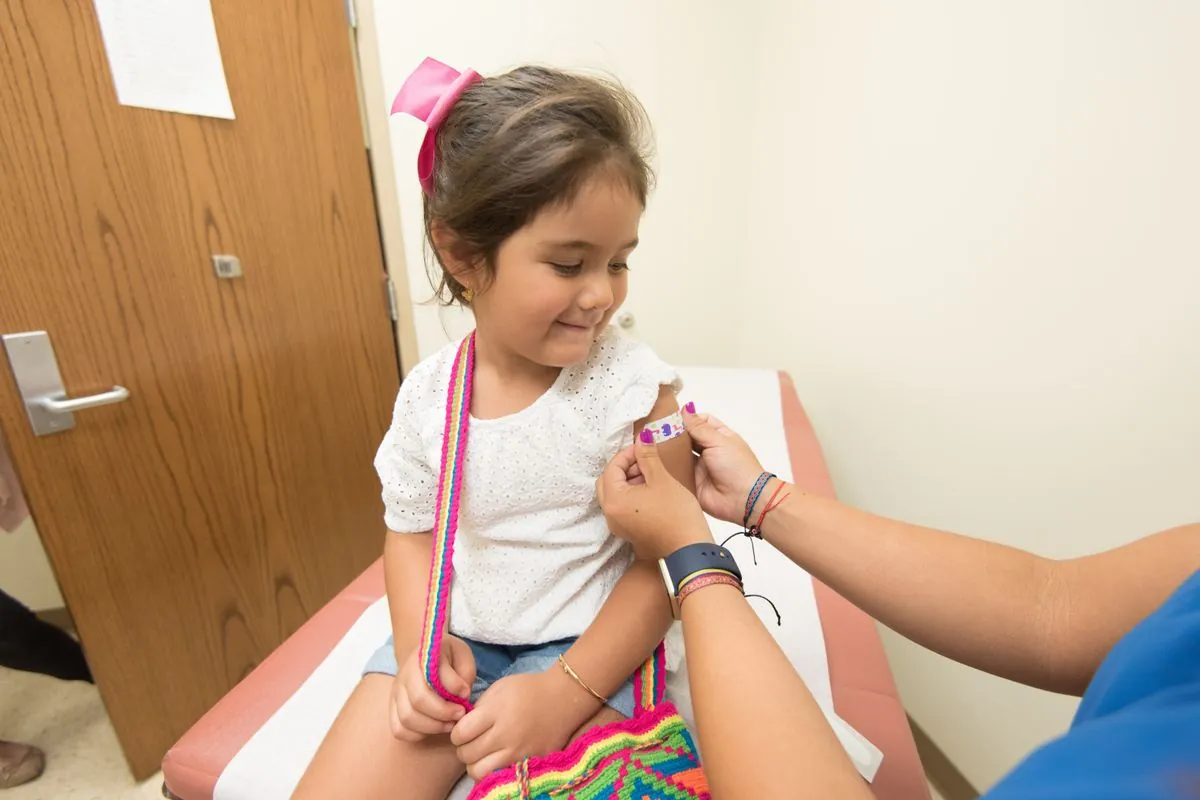
This autumn's vaccination campaign already has dates. In Catalonia it starts on 5 October for the first groups and opens to everyone else on 26 October, according to the calendar presented by the health department. Every year at this time the same questions come up in the consulting room: am I in a group, does it actually work, will it make me ill, and can I have it at the same time as the COVID jab?
This article answers all of that with the official recommendations in hand and without overselling what the flu vaccine can do. It also explains what flu really does to someone with a chronic illness, which is the reason the campaign exists in the first place.
What you will find in this article
- Campaign dates for 2026-2027
- Who it is recommended for
- Why it has to be repeated every year
- How long it takes to work
- What flu really does
- Flu, colds and COVID
- Side effects and myths
- Together with the COVID vaccine
- Pregnancy and breastfeeding
- Children aged 6 months to 4 years
- Where to get vaccinated in Palamós
- What the vaccine does not do
- Frequently asked questions
The key points in thirty seconds
- The Catalan campaign starts on 5 October with care homes, people aged 80 and over, pregnant women, children and healthcare staff, and opens to the remaining groups on 26 October.
- From 16 November you can walk into primary care teams without an appointment, and vaccines remain available until March.
- It is recommended from age 60, for children aged 6 months to 4 years, for pregnant women and for anyone aged 5 to 59 with a risk condition.
- It takes up to 14 days to work, according to the NHS, so it is worth not leaving it until flu is already going round.
- Injected flu vaccines contain no live virus and cannot give you flu.
- Flu causes between 290,000 and 650,000 respiratory deaths worldwide every year, according to the World Health Organization.
Flu vaccine 2026-2027: the campaign dates
This season the health department has kept the joint flu and COVID-19 campaign, with separate recommendations for each vaccine but simultaneous administration when both are indicated. The rollout is staggered:
- 5 October: care homes, people aged 80 and over, pregnant women, children and healthcare staff.
- 26 October: opens to the remaining recommended groups, initially by appointment.
- 16 November: walk-in vaccination begins at primary care teams.
- 18 December: the date by which most of the campaign should be done, although vaccines stay available all season, until March.
Appointments are booked through La Meva Salut, in the primary care appointments section, or directly at your local health centre (CAP). The full details are on the autumn vaccination campaign page of Canal Salut.
For a sense of scale: last season 1,524,442 flu doses were given in Catalonia, 112,517 more than the year before, and coverage among children aged 6 to 59 months rose by 7.5 points.
Who the flu vaccine is recommended for
The official list for this season includes:
- People aged 60 and over.
- Children aged 6 months to 4 years inclusive.
- People aged 5 to 59 with a risk condition: a weakened immune system, chronic illness, smokers and other situations your doctor will assess.
- People living in care homes or centres for people with disabilities.
- Pregnant women, or women who have given birth in the past 6 months.
- Children aged 5 to 18 on long-term acetylsalicylic acid treatment or with risk conditions.
- Health and social care staff, in both public and private centres, and students on placement.
- Pharmacy staff, teachers, essential workers and people exposed to animals at work.
- Household contacts and carers of people at high risk.
What counts as a risk condition
These are the illnesses that turn ordinary flu into something worse: chronic respiratory disease such as asthma or COPD, cardiovascular disease, diabetes, significant obesity, kidney or liver disease, cancer, immunosuppression and neuromuscular disorders, among others. If you are not sure whether you qualify, it is a two-minute question for your family doctor.
Why the flu vaccine has to be repeated every year
Two reasons that work together. The first is that flu viruses mutate from one season to the next, and the vaccine is reformulated each year to match them. The second is that the immunity produced by last year's dose fades over time. That is why last season's jab is no help now, even if you had it in December.
How long it takes to work and how long it lasts
The NHS puts it in one practical figure: the vaccine takes up to 14 days to work. That is the reason for getting it in autumn instead of waiting until the first cases appear locally. Protection also falls off through the season, which is the other reason it is an annual jab.
It is also worth knowing that you can catch flu after being vaccinated. When that happens it is usually milder and shorter, and what the vaccine really prevents is serious complications in the people most likely to have them.
What flu really does
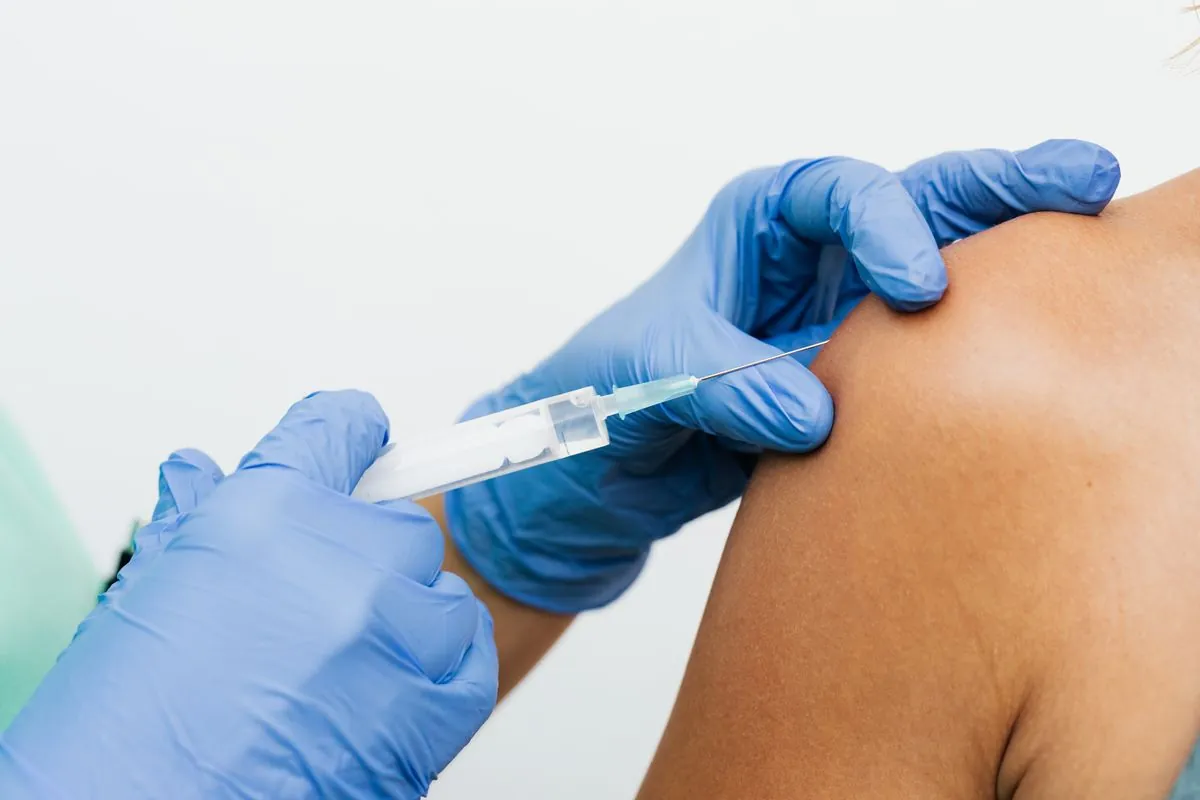
For a healthy adult, flu is usually a bad week. The global figures explain why health authorities push the campaign anyway: according to the World Health Organization, there are around a billion cases of seasonal flu worldwide each year, three to five million of them severe, and the disease causes between 290,000 and 650,000 respiratory deaths.
In people at risk, the complications described are pneumonia, ear and sinus infections, dehydration and the worsening of chronic conditions such as heart failure, asthma or diabetes. Those are the complications that end in hospital admission and, in some cases, intensive care.
Flu, colds and COVID: telling them apart
Flu usually starts suddenly: fever, cough, sore throat, aching muscles and a level of tiredness that puts you in bed. A cold builds up gradually, with a runny nose and sneezing, and rarely produces the same fever. COVID-19 can look very much like flu, which is why in winter the clinical difference is hard to call without a test.
Flu symptoms appear between one and four days after infection and usually last about a week. If there is breathlessness, chest pain, confusion or a fever that will not settle after several days, do not wait it out: that needs a medical assessment.
Flu vaccine side effects and myths
The usual side effects are mild and gone within a day or two: a sore arm where the injection was given, a slightly raised temperature and an aching body. Serious allergic reactions are very rare, and whoever vaccinates you is trained to deal with them.
Can the flu vaccine give me flu?
No. Injected flu vaccines contain no live virus, so they cannot cause the illness. What does happen sometimes is that someone is vaccinated and a few days later picks up one of the many other respiratory viruses going round in autumn, and blames the jab. They may also have been infected before the vaccination or during the 14 days it takes to work.
Can it be given with the COVID vaccine?
Yes. The campaign is a joint one and, when both vaccines are indicated, they are given at the same time. This season the COVID-19 vaccine is recommended from age 60, and also for people aged 6 months to 59 years with risk conditions, pregnant women, people in residential care, healthcare staff and household contacts of vulnerable people.
If you are getting over another viral infection, you can be vaccinated once you have recovered, with no specific waiting period. For the COVID-19 vaccine, however, a three-month wait is advised after having the illness.
Pregnancy, breastfeeding and the flu vaccine
This is one of the groups where the recommendation is clearest. Flu during pregnancy can become complicated for both mother and baby, and the vaccine can be given at any stage of pregnancy. As well as protecting the woman, it passes antibodies to the baby through the placenta and, in the case of flu, through breastfeeding too, which covers the first months of life, when the baby cannot yet be vaccinated.
It is also recommended after birth, and it can be given alongside the whooping cough vaccine.
Why children aged 6 months to 4 years are vaccinated
Because flu sends them to the doctor. The recommendation rests on the high number of medical visits, antibiotic courses and admissions for complications such as wheezing, pneumonia or ear infections, even in children with no underlying illness. And because children are the main route of transmission: they bring flu home, to their grandparents and to school.
If your child has asthma, autumn is already busy enough; we covered that in our article on childhood asthma and going back to school. The paediatrician can assess each case.
Where to get vaccinated in Palamós
The public campaign runs at primary care centres and is free for the recommended groups. Appointments are made through La Meva Salut, the booking website, or directly at your CAP.
The flu vaccine at Clínica Eupnea
Private practices give vaccines too. The nursing service at Clínica Eupnea administers routine schedule vaccines and travel vaccines, along with wound care, injectable medication, vital signs monitoring and ECGs. If you would like your flu vaccine here, call 872 21 75 91 first to check availability, and if you are unsure which vaccines apply to you given your age and medical history, the family doctor reviews that at the appointment. We are at Passeig del Mar, 41, Monday to Friday; there is full information about the centre in our guide to the medical centre in Palamós.
If you have a chronic respiratory condition, an appointment with the pulmonologist is a good moment to review both your vaccinations and your regular treatment before winter.
What the flu vaccine does not do
It does not protect against the common cold, respiratory syncytial virus or the rest of the winter viruses. Nor does it guarantee you will not catch flu. What it does, and it is not a small thing, is cut the risk of serious complications and hospital admission in the people most likely to suffer them.
Everything else still counts: washing your hands often, coughing into your elbow, airing closed rooms, wearing a mask if you have symptoms or will be around vulnerable people, and staying at home when you are ill. The NHS flu vaccine page covers the practical side in plain English.
Frequently asked questions
On 5 October for care homes, people aged 80 and over, pregnant women, children and healthcare staff. On 26 October it opens to the remaining recommended groups, initially by appointment, and from 16 November you can attend primary care teams without one. Vaccines remain available throughout the season, until March.
People aged 60 and over, children aged 6 months to 4 years, pregnant women or those who gave birth in the past six months, people aged 5 to 59 with risk conditions, people in residential care, health and social care staff, household contacts and carers of high-risk people, pharmacy staff, teachers, essential workers and people exposed to animals at work.
No. Injected flu vaccines contain no live virus and cannot cause the illness. The usual side effects are a sore arm, a slightly raised temperature and an aching body for a day or two. If someone comes down with a respiratory illness just after being vaccinated, it is usually another of the viruses circulating in autumn, or an infection caught before the vaccine had taken effect.
Up to 14 days, according to the NHS. That is why the advice is to have it in autumn, before the virus starts circulating widely. Protection fades through the season and the vaccine is reformulated each year, which are the two reasons it has to be repeated.
Yes. The campaign is a joint one and, when both vaccines are indicated, they are given at the same time. The COVID-19 vaccine is recommended from age 60 and for people aged 6 months to 59 years with risk conditions, pregnant women, people in residential care, healthcare staff and household contacts of vulnerable people. If you have had COVID, a three-month wait is advised for that particular vaccine.
Yes, and it is one of the groups where the recommendation is strongest. It can be given at any stage of pregnancy and also after birth. As well as protecting the mother, antibodies reach the baby through the placenta and during breastfeeding, covering the first months of life, when the baby cannot yet be vaccinated. It can be given alongside the whooping cough vaccine.
The public campaign runs at the CAP, with appointments through La Meva Salut or the booking website, and it is free for the recommended groups. Private practices give vaccines too: at Clínica Eupnea the nursing service administers routine schedule and travel vaccines, and the family doctor reviews which ones apply to you. Call 872 21 75 91 to check availability.
Not sure which vaccines you need?
At Clínica Eupnea in Palamós the family doctor reviews them according to your age and medical history, and the nursing team gives them.
Book an Appointment