

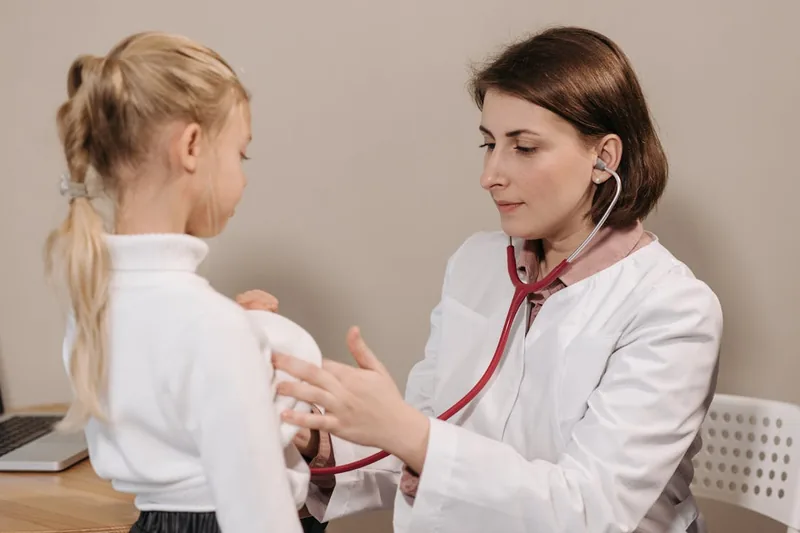
The first years of life are crucial for a child's development. Proper paediatric follow-up enables early detection of any abnormality, ensures correct growth and development, and prevents diseases through vaccination.
At Clínica Eupnea in Palamós, the paediatrics service provides comprehensive care for children from birth through adolescence.
In this article
Key takeaways
- Paediatric check-ups enable early detection of developmental issues
- Vaccines are the most effective public health measure after clean water
- Frequent colds at nursery are normal (6–8 per year)
- High fever in babies under 3 months always requires urgent medical attention
- A varied diet from 6 months onwards sets habits for life
- Sleep is essential: each age group needs specific hours of rest
Paediatric check-up schedule
Well-child visits are scheduled appointments where the paediatrician assesses the child's growth, development and general health. The usual schedule is:
- First week of life: first paediatric visit. Weight check, breastfeeding, neonatal jaundice
- 1–2 months: growth assessment, reflexes, hips. Start of the vaccination schedule
- 4 and 6 months: weight and height monitoring, motor development milestones, introduction of complementary feeding
- 9–12 months: psychomotor development evaluation, teething, language
- 15–18 months: independent walking, first words, socialisation
- 2 years: language assessment (should say at least 50 words), autonomy
- 3–4 years: pre-school check, vision, hearing
- 6 years: school-entry check, vision and spine assessment
- Adolescence (11–14 years): pubertal development, vaccination and guidance
Vaccines: the best protection
Vaccines are, alongside clean water, the public health measure that has saved the most lives in history. The vaccination schedule protects against potentially serious diseases.
It is important for parents to understand that vaccines are safe and have been extensively studied. The common side effects (mild fever, redness at the injection site) are minor and temporary.
Common childhood illnesses
Children, especially when they start nursery, fall ill frequently. This is normal and is part of the immune system's maturation process. The most common are:
- Colds (6–8 per year): runny nose, cough, mild fever. The vast majority are viral and resolve on their own in 7–10 days
- Otitis media: ear pain, fever, irritability. Common between 6 months and 3 years
- Gastroenteritis: vomiting and/or diarrhoea, often caused by rotavirus in the early years. Keeping the child hydrated is key
- Bronchiolitis: a respiratory infection caused by RSV, common in children under 2. It causes breathing difficulty and wheezing
- Exanthematous diseases: chickenpox, hand-foot-and-mouth, roseola, scarlet fever
Fever in children: when to worry
Fever is not an illness but a defence mechanism. However, consult the paediatrician if: the child is under 3 months and has a temperature above 38°C (urgent); the fever lasts more than 48–72 hours; the child is very listless and refuses to eat or drink; spots appear on the skin that do not blanch on pressure; or if your parental instinct tells you something is not right.
Warning signs
Go to the paediatrician or A&E if you notice:
- High fever in babies under 3 months (>38°C rectal)
- Breathing difficulty: rib recession, very rapid breathing, blue lips
- Dehydration: dry nappy for more than 6–8 hours, crying without tears, very dry mouth
- Petechiae: red/purple spots that do not fade on pressure (to rule out meningitis)
- Excessive drowsiness or difficulty waking the child
- Seizures
Healthy habits from an early age
Establishing healthy habits from a young age is an investment in adult health:
- Varied diet: introduce all foods from 6 months (except allergens as advised by the paediatrician), avoid added sugars and ultra-processed foods
- Physical activity: at least 60 minutes of active play per day
- Screens: avoid before age 2; limit to 1 hour a day between ages 2 and 5
- Sleep: 14–17 hours (newborns), 12–14 (1–3 years), 10–12 (3–6 years), 9–11 (6–12 years)
- Dental hygiene: start brushing teeth as soon as the first tooth appears
Frequently asked questions
It is normal for children to have 6 to 8 colds a year, especially if they attend nursery. Some children may have as many as 10–12 episodes in the first few years. This is part of the immune system's maturation process. The frequency gradually decreases as the child grows.
Yes, vaccines are one of the safest and most effective medical advances. Before approval, every vaccine undergoes years of rigorous clinical trials. The common side effects (mild fever, soreness at the injection site) are minor and temporary. The benefits of vaccination far outweigh the minimal risks.
Go to A&E if: the child has a high fever and is under 3 months old; shows breathing difficulty (rib recession, blue lips); displays signs of severe dehydration (no urine for 6–8 hours, crying without tears); develops spots that do not fade when pressed; has a seizure; or is very drowsy and unresponsive.
By age 2, most children say at least 50 words and begin to combine two words ('mummy water', 'more bread'). If your child says fewer than 20 words at 18 months or is not combining words by age 2, consult the paediatrician for a language development assessment. Early intervention, if needed, yields excellent results.
Need a paediatrician in Palamós?
The paediatrics service at Clínica Eupnea cares for your child with professionalism and warmth.
Make an Appointment