
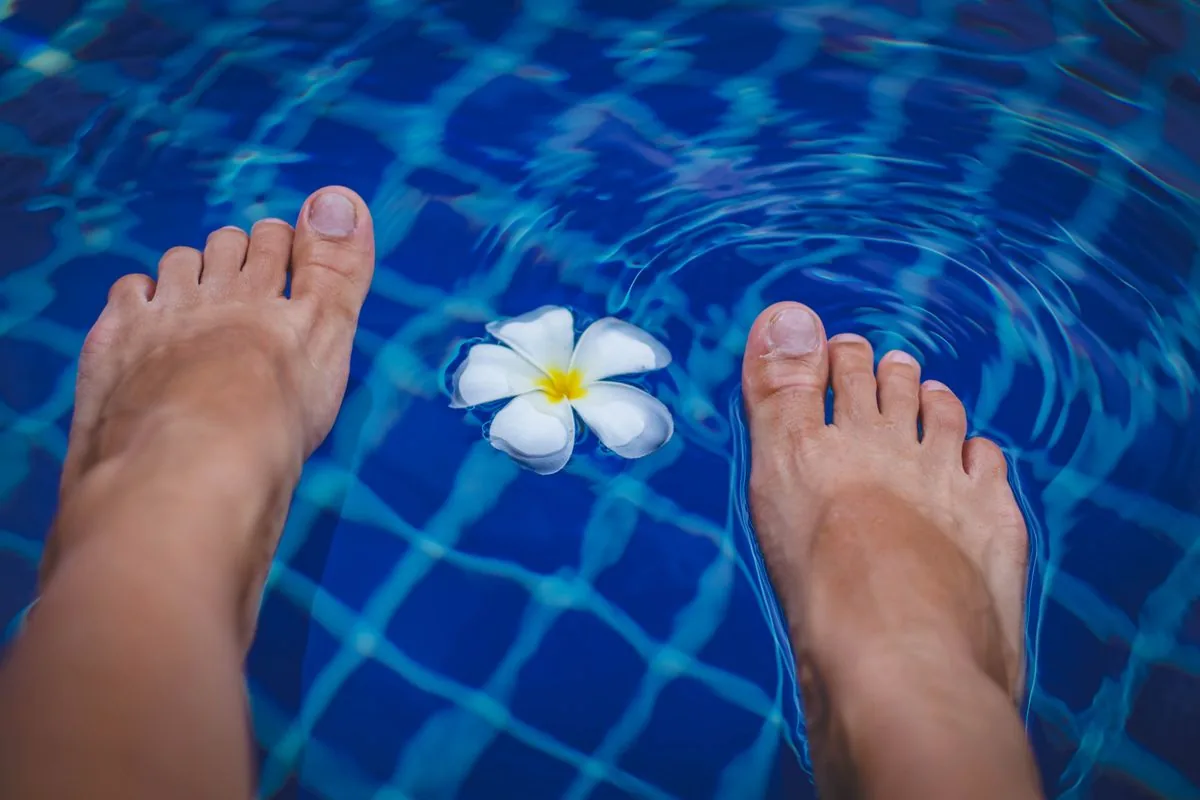
You get back from the pool, kick off your flip-flops and notice an itch between your toes that will not let up. The skin there has gone white and soft, as though it had been left soaking too long, and a few days later it starts to split. That scene plays out in podiatry clinics every summer, and it has a name of its own: athlete's foot.
Athlete's foot, or tinea pedis, is an infection of the skin of the feet caused by dermatophyte fungi. You do not need to play any sport to catch it. The name comes from the changing rooms and shared showers where it spreads most easily, but one barefoot walk across a damp floor is enough to take it home with you. At Clínica Eupnea, in Palamós (Baix Empordà), our podiatry and dermatology clinics see a wave of these appointments every July and August. Let's look at why it turns up, how to recognise it, what you can do to prevent foot fungus, and how it is treated.
In this article
Key takeaways
- Athlete's foot is an infection caused by dermatophyte fungi that attacks the skin of the feet, above all between the toes
- You catch it on shared damp floors: changing rooms, showers, gyms and poolsides
- Moisture and closed shoes are its two great allies
- The classic signs are itching, white soggy skin, flaking and cracks between the toes
- Treatment rests on antifungal creams, and the course has to be finished even once the itching has gone
- See a podiatrist if it does not improve, if it reaches your nails or if you have diabetes
What is athlete's foot (tinea pedis)?
Athlete's foot is a superficial skin infection caused by a group of fungi called dermatophytes, the commonest of which is Trichophyton rubrum. These fungi feed on keratin, the protein that makes up the outermost layer of the skin and the nails, and the foot hands them their ideal stage: an area shut inside a shoe, warm, and damp with sweat for hours at a time.
It is the most frequent fungal infection in humans and, despite the name, it does not distinguish between athletes and people who never move. Sportspeople get more of it because they line up three perfect conditions: hours in closed footwear, sweat, and shared changing rooms. Anyone who spends the summer getting in and out of the pool, or walking barefoot around a campsite or a gym, faces exactly the same set-up.
How you catch athlete's foot: causes and risk factors
You do not catch it from the pool water, which is chlorinated, but from the floor around it. An infected person leaves small flakes of skin carrying fungus on the changing-room tiles, in the shower and along the edge of the pool. Those flakes survive for a good while in a damp setting and attach themselves to the next bare foot that walks over them. After that, all the fungus needs in order to take hold is what it finds inside a closed shoe: warmth and moisture.
Certain circumstances make the fungus's job a great deal easier. These are the most common risk factors:
- Walking barefoot in changing rooms, public showers, gyms, saunas and around swimming pools.
- Sweating heavily from the feet (hyperhidrosis) or keeping damp socks on for hours.
- Wearing closed footwear that does not breathe, made of plastic or rubber, or putting on the same pair every single day without letting it dry out.
- Sharing towels, flip-flops, socks or shoes.
- Having diabetes, poor circulation in the legs, or a weakened immune system.
- Having had athlete's foot before, or having fungus in the toenails, which acts as a reservoir.
Symptoms: how to recognise foot fungus
The symptoms of athlete's foot depend on the form the infection takes, and they do not always look the way people expect. There are three usual presentations:
Interdigital athlete's foot, the most common form
It starts between the toes, very often between the fourth and the fifth, which is the narrowest gap and the one that holds the most moisture. The skin looks white, soft and waterlogged, it itches, it flakes and it ends up cracking. There is usually a faint smell to it, and plenty of people put the whole thing down to sweat and maceration.
Moccasin-type foot fungus
This one affects the sole, the heel and the sides, tracing out precisely the area a moccasin would cover. The skin thickens, dries and fills with fine scales, with a discreet redness underneath. It is the most chronic form and the one that slips by unnoticed: many people live with it for years, convinced they simply have dry feet, applying moisturiser that never quite works.
Vesicular athlete's foot
Small fluid-filled blisters appear, normally on the instep or the sole, with itching and a burning feeling. It is the least frequent and the most unpleasant, and it tends to erupt out of nowhere in the middle of a heatwave.
One detail points the way better than any other: athlete's foot usually begins in one foot only and itches for real, whereas the dry skin you have had all your life tends to be symmetrical and barely itches at all.

How to prevent athlete's foot in summer
Preventing athlete's foot boils down to a single idea: do not hand the fungus the floor or the moisture it needs. These habits are what make the difference through the pool season:
- Wear flip-flops whenever you set foot in changing rooms, communal showers, saunas or the poolside. No other single measure prevents more infections.
- Dry your feet properly when you come out of the water or the shower, and be stubborn about it between the toes, where the water stays trapped.
- Change your socks daily, and more than once a day if you sweat a lot. Cotton or technical fabrics that draw moisture away work best.
- Let your shoes air and rotate pairs so that each one dries out completely between wears.
- Do not share towels, footwear or flip-flops, not even at home.
- If your feet tend to sweat, antifungal powders or sprays inside your shoes help keep that little climate dry.
These precautions count double for children, who spend the summer barefoot between the grass, the shower and the edge of the pool, and for anyone who trains every day.
Treatment for athlete's foot
The treatment of athlete's foot is generally straightforward when it is started early and, above all, when it is seen through to the end.
Antifungal creams, the backbone of treatment
Treatment rests on topical antifungals in cream, gel or spray form: terbinafine, clotrimazole or miconazole. They go onto clean, thoroughly dry skin, covering the affected area and a little of the healthy skin around it. How long you use them depends on the product and on the form you have, and can run from one week to a month. The itching disappears well before the fungus does, and this is where most people slip up: you have to finish the whole course, even if the foot looks cured, because otherwise the infection comes back within a few weeks. When the infection is extensive, deeply chronic or has reached the nails, your doctor may consider an oral antifungal, which needs medical supervision.
When to see a podiatrist about athlete's foot
It is worth booking an appointment if two to four weeks pass with no improvement, if the infection returns again and again, if it has reached the nails, if blisters or pain appear, or if you have diabetes or circulation problems. In the consulting room we confirm that fungus really is behind it, since eczema and plantar psoriasis can look remarkably similar, treat the hardened skin and plan the nail treatment where one is needed. You can see what we offer on our page for the podiatrist in Palamós and, if the problem is more a matter of skin than nail, our dermatology team can help you too.
The step almost everyone skips: drying between the toes
Climbing out of the pool and pushing wet feet into your flip-flops leaves water trapped in exactly the place where athlete's foot begins. Spend ten seconds with the towel going toe by toe, and pay particular attention to the gap between the fourth and the fifth. If you sweat heavily, or if you have had foot fungus before, finish with a dusting of antifungal powder before you put your shoes on. That is the difference between a dry foot and a growing medium.
Complications and warning signs of foot fungus
In most cases athlete's foot is a minor infection, but letting it run has consequences. The most frequent is onychomycosis: the fungus jumps from the skin into the nail, which thickens, turns yellowish and slowly crumbles away. An infected nail is a storehouse of fungus that reinfects the skin over and over, and clearing it takes far longer than clearing the skin. The fungus can also travel to the groin, or to the hands if you scratch and then touch elsewhere.
The warning sign nobody should ignore is bacterial superinfection. Those cracks between the toes are an open door for bacteria and can end in cellulitis or erysipelas: the skin of the foot or the leg turns red, hot, swollen and painful, often with a fever. That needs medical attention without waiting. In people with diabetes the risk is particularly serious, because a loss of sensation means a wound can go unnoticed until it has already become complicated, and this is why podiatry check-ups form part of routine diabetes care.
If the other infections the swimming pool hands us each summer are of interest, we have a guide on swimmer's ear, and if what is bothering you is a different kind of foot pain, here you will find the causes of pain in the sole of the foot. To read further in reliable medical sources, you can consult MedlinePlus (US National Library of Medicine), the UK National Health Service (NHS) or the dermatology resource DermNet.
Frequently asked questions about athlete's foot
Dry skin usually affects both feet more or less equally, barely itches and improves with a moisturiser. Athlete's foot tends to start between the toes, often on one foot only, with stubborn itching, skin that looks white and soggy, and cracks that refuse to heal however much cream you put on them. When the infection turns chronic and spreads across the sole, it can pass for the dry skin you think you have always had. If you are unsure, a podiatrist or a dermatologist can settle it by examining the foot and, if necessary, taking a small skin sample to look for fungus.
With an antifungal cream the itching usually eases within a few days and the infection clears in one to four weeks, depending on the product and on the form you have. The fungus can still be alive in the skin long after you stop feeling anything, so you need to finish the full course you were given instead of dropping it the day your foot looks normal: stopping early is the most common reason athlete's foot returns a few weeks later. Chronic forms that cover the whole sole take longer.
Yes. The fungus spreads through contact with flakes of infected skin left behind on floors and fabrics. The risky places are changing rooms, shared showers, poolsides and gyms, but your own bathroom counts too if someone in the family has it. To avoid passing it on, do not share towels, flip-flops or shoes, wash socks and swimwear at a high temperature, and wear flip-flops in the shower for as long as the infection lasts.
Better to wait. While the infection is active you are shedding fungus onto the floor and can pass it to other people, and the constant damp means your own skin takes longer to heal. If giving up the pool is not an option, always wear flip-flops on the poolside and in the changing rooms, dry your feet carefully when you get out, especially between the toes, and put the treatment on straight afterwards. Once the skin has healed you can go back to your usual routine with the prevention measures in place.
They are caused by the same fungi, but they are not the same problem. When the fungus moves from the skin into the nail you get onychomycosis: the nail turns yellowish or brown, thickens and begins to crumble from the tip. It matters more than it looks, because an infected nail works as a store of fungus that reinfects the skin over and over. So if your athlete's foot keeps coming back, the nails are worth a look: nail treatment is much longer and often needs a podiatrist to supervise it.
Get it checked if two to four weeks of treatment bring no improvement, if the infection keeps returning, if it has reached the nails, if you have blisters or real pain, or if the skin around it looks red, hot and swollen, which can point to a bacterial infection on top. People with diabetes, circulation problems or a weakened immune system should always see someone rather than wait: in their case a crack between the toes is an open door for bacteria and needs watching closely.
Foot fungus does not clear up on its own
The podiatry team at Clínica Eupnea in Palamós helps you confirm the diagnosis, treat your athlete's foot and keep it from returning every summer. We also check the nails and look after the diabetic foot.
Book an Appointment