

You wake up with a blocked nose, sneeze four or five times before your coffee, and by mid-morning at work you are perfectly fine. Next day, the same. After ten days you start thinking this cold will never end, when in fact you never had one.
Allergic rhinitis is the most common of all allergic conditions and affects roughly one person in four. On the Costa Brava it has a twist that surprises a lot of people: the peak does not arrive in spring with the pollen, but in September and October, and the culprit usually lives inside the house. It is the house dust mite.
What you will find in this article
- Why rhinitis gets worse in autumn
- Symptoms: what allergic rhinitis does
- Allergic rhinitis or a cold: five differences
- Intermittent or persistent: how it is classified
- The nose and the bronchi are the same tube
- Sinusitis, glue ear and poor sleep
- How it is confirmed: prick test, IgE and nasal challenge
- Environmental control: what works against mites
- Treatment: rinses, antihistamines and nasal steroid
- Immunotherapy: changing the course of the disease
- When to book an appointment with the allergist
- Frequently asked questions
The key points in thirty seconds
- The house dust mite multiplies at 20-25 °C with high humidity and all but disappears below 45 % relative humidity. The coast suits it perfectly; autumn, even more so.
- What triggers the allergy is not the mite itself but its droppings, and the main reservoir is the mattress and the pillow.
- Allergic rhinitis itches, comes in bursts of sneezes and produces clear mucus. A cold brings a sore throat, malaise and clears up on its own.
- The diagnosis is settled with a prick test or specific IgE, not by the colour of the mucus.
- The nasal corticosteroid is the most effective drug, but it needs several days to work.
- Immunotherapy is the only treatment that modifies the disease; it lasts three to five years.
Why rhinitis gets worse in autumn
House dust mites are microscopic arachnids, two to five tenths of a millimetre across, that feed on the skin scales we shed as we go. They do not bite, they carry nothing and you cannot see them. The problem is chemical: the proteins in their droppings are potent allergens and end up as a fine dust that is thrown back into the air every time you turn over in bed or shake a pillow.
The mite needs warmth and humidity, and the Baix Empordà has both
This species is comfortable at 20 to 25 °C with high relative humidity, around 70-75 %. Below 45 % humidity it dries out and dies, which is why sensitisation to mites is far lower in the mountains and in the dry interior of the peninsula. On the coastal strip the opposite happens, and household dust is a year-round source of allergen, as the MSD Manual entry on year-round allergies explains.
The consequence is seasonal. The population grows through the summer and peaks in late August and September, exactly when sea humidity is still high and the temperature is no longer scorching. What you breathe in the bedroom in September is far more loaded than it was in July, even if the house is just as clean.
The late-summer moulds
The second player in autumn is Alternaria, an environmental mould that lives on plant debris and releases spores in warm, dry weather. Its Mediterranean peak falls precisely between the end of summer and the start of autumn, and in parts of Spain there are two seasons, one in late spring and another one now. The clinic already has this mapped: the commonest allergens in the Baix Empordà are pellitory, grasses, olive, cypress, dust mites and environmental moulds.
And the change of habits
In September the windows close at night, the household routine returns and, a few weeks later, the heating goes on. More hours indoors, less ventilation. None of this creates the allergy, but it concentrates the exposure, which is why so many people date the start of their symptoms to «just after we got back from holiday».
Symptoms: what allergic rhinitis does
The typical picture combines bursts of sneezing, clear watery mucus, congestion and itching. The itch is the most telling detail, because a virus does not itch: here the nose itches, often the palate and the back of the throat, and very often the eyes too, which go red and water. When the conjunctiva joins in we call it rhinoconjunctivitis, which is the commonest form.
Some symptoms are not usually linked to allergy but belong to it: daytime tiredness, a dull frontal headache, reduced sense of smell, a dry throat in the morning after a night of mouth breathing, and in children a repeated upward rub of the nose with the palm. The MedlinePlus page on allergic rhinitis lists them in plain language and is not selling anything.
Allergic rhinitis or a cold: five differences
- The itch. Present in allergy, absent in a cold.
- The sneezing. In bursts of five or six in a row, not the odd one now and then.
- The mucus. Clear and runny throughout. In a cold it thickens and darkens around day three or four.
- Fever and malaise. A cold usually starts with a sore throat and aching; allergy does neither.
- Duration and pattern. A virus is over in seven to ten days. Allergy repeats every day, often worse first thing in the morning or on walking into one particular room.
This distinction is not trivia. Getting it right saves antibiotics that are not needed and, above all, spares you years of treating every autumn as if it were a back-to-school cold.
Intermittent or persistent: how it is classified
The international classification used in clinic does not sort rhinitis by allergen but by time and by impact. It counts as intermittent when symptoms appear on four days a week or fewer, or for less than four consecutive weeks, and persistent when they exceed four days a week and four consecutive weeks. Severity is measured with four questions: do you sleep well, can you carry on with daily activities and sport, are you performing at work or school, and are the symptoms troublesome. If none of those four is affected it is mild; if any is, it is moderate or severe.
It sounds bureaucratic and it is not: that label decides the treatment. Mild intermittent rhinitis is controlled with an antihistamine and environmental measures, whereas moderate persistent rhinitis calls for a daily nasal steroid and a full work-up. The NHS page on allergic rhinitis sets out the same treatment ladder for patients.
The nose and the bronchi are the same tube
The lining that becomes inflamed in the nose carries on downwards with no border. That is why rhinitis and asthma so often travel together: between 70 and 90 per cent of people with asthma have rhinitis, and between 19 and 38 per cent of people with rhinitis have, or will develop, asthma. Treating the nose properly improves asthma control; ignoring it makes control harder.
So whenever persistent rhinitis turns up at the allergology clinic, we always ask about the chest: a dry cough in the small hours, wheezing, a tight chest on exertion or when laughing. If there is any suspicion, the work-up is extended with spirometry and, where appropriate, a measurement of exhaled nitric oxide, which estimates airway inflammation. The assessment is shared between the allergist and the pulmonology service. In children the same overlap explains why attacks spike in September, a subject we covered in the article on childhood asthma and going back to school.
Sinusitis, glue ear and poor sleep
Poorly controlled rhinitis does not sit still. Sustained congestion hinders sinus drainage and encourages recurrent sinusitis; in children, blockage of the Eustachian tube causes glue ear that goes unnoticed and shows up as mild hearing loss. Once the picture has lasted weeks or months, the examination is completed by the ENT service, which can rule out nasal polyps or a deviated septum that is adding to the problem.
And there is a silent cost: sleep. Breathing through your mouth all night fragments rest, and the result gets blamed on stress, on short nights or on age. Many patients only realise how badly they were sleeping after two weeks of treatment.
When not to wait until next September
Ask for an assessment sooner if the symptoms affect only one side of the nose, if there is repeated bleeding, if the mucus is thick and green with facial pain and fever, if you have suddenly lost your sense of smell, if you feel breathless or wheezy, or if the symptoms are not settling on the treatment you were already taking. None of that belongs to simple allergic rhinitis, and all of it deserves an examination.
How it is confirmed: prick test, IgE and nasal challenge
Diagnosis starts with the history, which is more informative than it sounds: which months it appears, at what time of day, whether it improves away from home, whether there are pets, damp or carpets, and what happens to parents and siblings. That alone usually points at the allergen; what is left is to prove it.
How we diagnose allergic rhinitis at Clínica Eupnea
The prick test means placing a drop of each extract on the forearm and pricking the skin through it. Fifteen to twenty minutes later the reaction is read against a control. It is quick, inexpensive and done in the consulting room; the only requirement is having stopped antihistamines five to seven days earlier, otherwise the skin will not respond. When the skin cannot be used, because of extensive dermatitis or medication that cannot be paused, we run a specific IgE blood test. In doubtful cases, when symptoms and tests do not quite line up, there is the nasal or conjunctival challenge, which reproduces the reaction under control. We explained the procedure in detail in the article on the allergy test, and the basics of allergic disease in the guide to the origin and impact of allergies.
Environmental control: what works against mites
The bedroom first
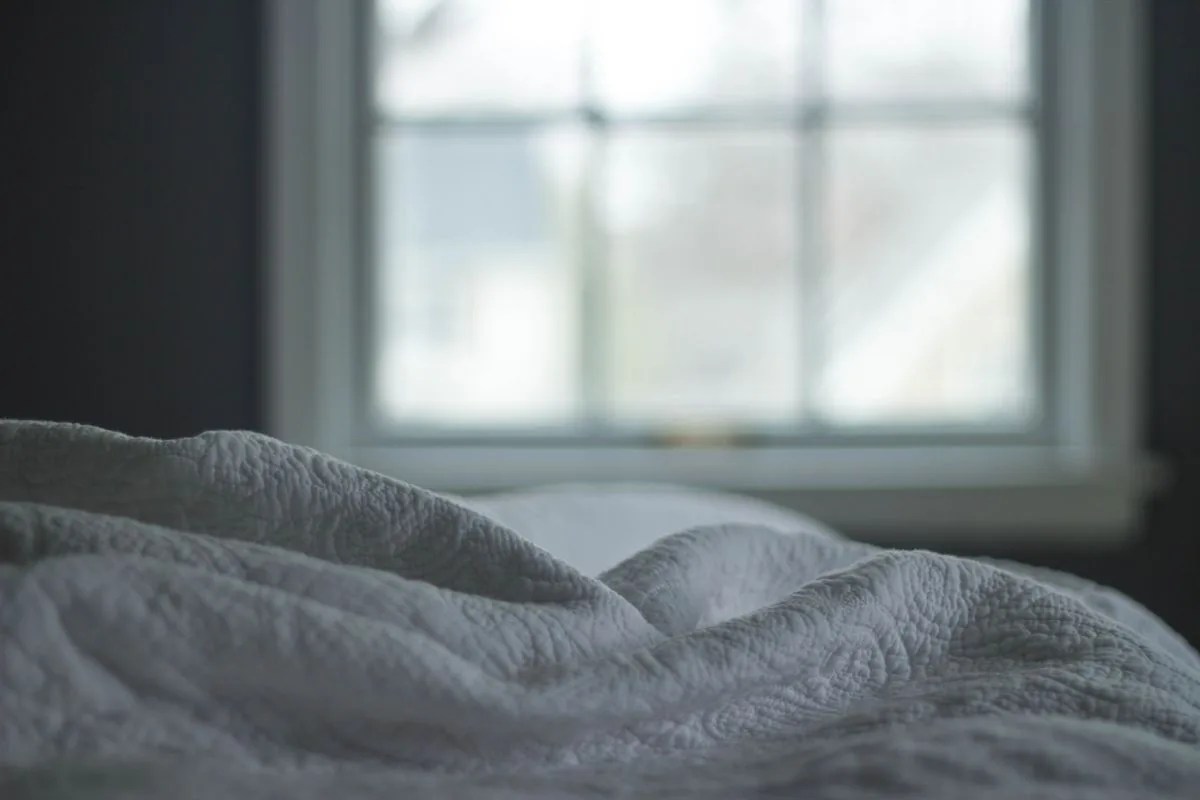
You spend a third of your life there and that is where the mites are. The measures that make sense are few and specific: bedding washed weekly at 60 °C, tightly woven mattress and pillow covers, rugs, carpets and soft toys out of the room, vacuuming with a HEPA or water filter instead of sweeping, damp dusting rather than dry, ventilating every day even when it is cold, and keeping indoor humidity below 50 % if you have a cheap hygrometer to check. The NHS prevention advice puts the same emphasis on washing temperature, HEPA filters and keeping the home dry and well ventilated.
Where the time gets wasted
Here it pays to be honest. Reviews that have tested these measures find that they do reduce mite load, but the trials measuring symptoms are small and of uneven quality, and when a single isolated measure is studied (the mattress cover on its own, for instance) the clinical benefit is slight. That does not mean they are useless: it means they work as a sustained package and do not replace treatment. Buying an expensive cover and stopping there is the usual way of ending up exactly where you started and concluding that allergy has no solution.
Treatment: rinses, antihistamines and nasal steroid
Nasal rinses with saline are the foundation and the step most often skipped. They wash out allergen and mucus, ease congestion with no adverse effects and can be repeated up to three times a day. Done before the spray, they let the drug reach where it needs to go.
Second-generation oral antihistamines cut the itching, the sneezing and the runny nose, and barely cause drowsiness. They do little for congestion, which is the symptom that bothers people most at night.
The nasal corticosteroid is the most effective drug across every symptom at once, congestion included. It acts locally, the dose reaching the bloodstream is minimal and it is designed for weeks of continuous use. Two rules decide whether it works: use it every day, including the good days, and aim the spray towards the outer wall of the nostril, never at the septum, to avoid dryness and bleeding.
Decongestant sprays and the rebound effect
Over-the-counter nasal vasoconstrictors clear the nose in a minute and are a well-known trap. After a few days they stop working and the lining swells more than it did at the start, so the patient increases the dose and enters a cycle that can last years. The NHS advice is not to use them for more than five days in a row, and not at all in children under six. If you have been carrying one around for a while, say so at the appointment: it can be sorted out, but it needs a plan.
Immunotherapy: changing the course of the disease
Everything above relieves symptoms. Immunotherapy, or the allergy vaccine, is the only treatment capable of altering the natural history of the disease: increasing doses of the allergen are given, by injection or as sublingual drops, until the immune system stops overreacting. It lasts three to five years and the effect persists long after it ends.
It is not for everyone. It needs a clearly identified allergen that explains the picture, symptoms troublesome enough to justify a long treatment, and consistency. When that combination is present, efficacy in rhinitis and asthma is between 80 and 90 per cent. The indication is always assessed by the allergist, test results in hand.
When to book an appointment with the allergist
It makes sense to book if you have had a blocked nose and sneezing for more than three or four weeks, if the same thing happens every autumn, if pharmacy antihistamines are no longer enough, if you sleep badly or breathe through your mouth, if you have started to notice a dry cough or breathlessness, or if you simply want to know what you are allergic to instead of guessing. At Clínica Eupnea in Palamós, Dr Carolina Escobar performs the prick test, the IgE work-up, spirometry and exhaled nitric oxide measurement on site, and assesses immunotherapy where it is indicated.
Frequently asked questions
Look at three things: the itch, the clock and the calendar. Allergic rhinitis itches (nose, palate, eyes) and a cold does not; the sneezes come in bursts of five or six and the mucus stays clear and watery; and the symptoms repeat day after day, always at the same time or in the same room. A cold starts with a sore throat and a run-down feeling, often with a slight fever, and it is over in a week to ten days. If you have had a blocked nose for three weeks and nothing else, it is no longer a virus.
Because what changes is not your allergy but the amount of allergen. The house dust mite breeds well at around 20-25 °C with high relative humidity, and from September onwards the Girona coast provides both at once. In practice, by the end of summer the mite population has peaked, so what you breathe in the bedroom is far more concentrated than it was in July. It also helps that you are back to spending more hours indoors with the windows shut.
The prick test uses tiny superficial punctures on the forearm, so fine that most people describe them as a nuisance rather than pain. A drop of each extract is placed on the skin, the skin is pricked through the drop and then you wait. The reading is taken after fifteen to twenty minutes, so you leave the appointment with the result. The one piece of preparation that matters is stopping antihistamines five to seven days beforehand: otherwise the skin will not react and the test is wasted.
There is, but less than the advertising suggests and far less if it is the only thing you do. Reviews of these measures find that they do reduce the number of mites, yet the trials that look at whether symptoms improve give weak results when a single isolated measure is studied, such as a mattress cover on its own. The reasonable reading is that environmental control works as a sustained package, above all in the bedroom, and that it does not replace treatment or immunotherapy.
They are the most effective treatment for every symptom of rhinitis and they are designed precisely for continuous use over weeks or months. The dose that reaches the bloodstream is very small, and the usual side effects are local: dryness, crusting or a little bleeding, which often disappear once you angle the spray outwards rather than at the septum. What is worth knowing is that they do not work on day one: they take a few days to act and some patients do not feel the full effect until the second week. Giving up on day three because «they do nothing» is the commonest mistake.
The nose and the bronchi are the same airway and they become inflamed by the same mechanism. Between 70 and 90 per cent of people with asthma also have rhinitis, and between 19 and 38 per cent of people with rhinitis end up with asthma. That does not mean it will happen to you, but it is worth mentioning if, along with the sneezing, you notice a dry night-time cough, a tight chest or breathlessness walking up a hill. In that case we run a spirometry and, if needed, measure exhaled nitric oxide to see how inflamed the bronchi are.
It is the only thing that changes the course of the disease rather than masking the symptoms. Increasing doses of the allergen you are sensitive to are given, either by injection or as drops under the tongue, until the immune system stops overreacting to it. Treatment lasts between three and five years and it is not for everyone: the test has to have identified a clear allergen, and that allergen has to explain what is happening to you. When it is properly indicated, efficacy in rhinitis and asthma is between 80 and 90 per cent, and the effect persists for years after finishing.
Same blocked nose every autumn?
At Clínica Eupnea in Palamós we run the prick test with the result the same day and explain what you are allergic to and what can be done about it.
Book an Appointment