
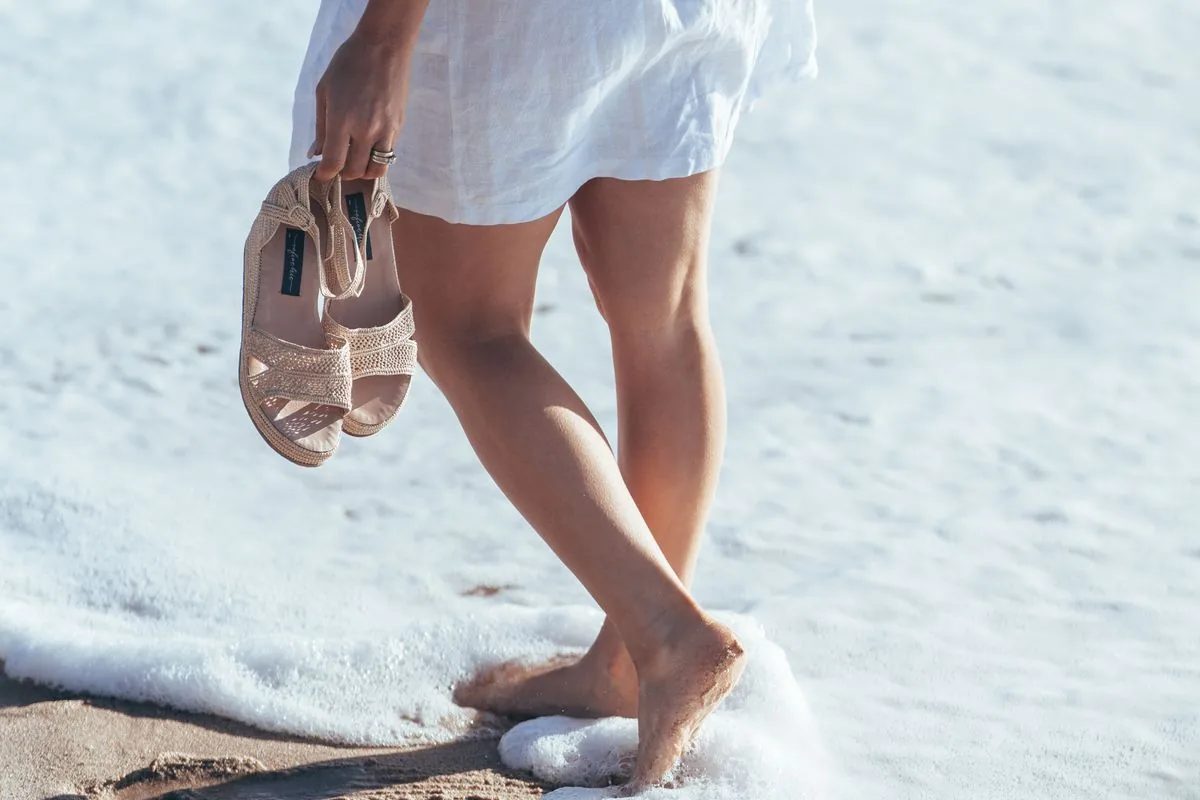
Mid-afternoon on an August day you slip off your sandal and there is the mark. The sock has left a groove around the ankle, your ring will not turn and your legs feel as if you had walked twice as far as you did. It happens every summer and most people file it away as settled: it is hot, legs swell.
Largely, that is true. There is a point, though, where swollen legs stop being a seasonal nuisance and start being a symptom: when only one leg is affected, when the swelling does not fully clear overnight, or when varicose veins, burning or cramps turn up alongside it. At Clínica Eupnea, in Palamós (Baix Empordà), that is what brings many people to a venous Doppler ultrasound, the only way to check whether the valves inside the veins are doing their job.
In this article
- Why legs swell in the heat
- Chronic venous insufficiency: when it is not just the heat
- Varicose veins: when they stop being a cosmetic matter
- Long car or plane journeys: the risk that does count
- Red flags: when to be seen the same day
- Swollen legs from causes that are not venous
- How it is investigated: the venous Doppler ultrasound
- What works day to day
- Frequently asked questions
Key points
- Heat widens the veins and blood travels back up less easily, which is why swollen legs get worse in July and August
- Ordinary summer swelling affects both legs, appears in the evening and clears after a night in bed
- Chronic venous insufficiency begins when the valves inside the veins stop closing properly and blood flows backwards
- A leg that swells suddenly, with calf pain, warmth or redness, is not down to the weather: it may be a deep vein thrombosis
- A venous Doppler ultrasound shows flow, reflux and clots with no pain, no radiation and no preparation
- Compression stockings help a great deal, but arterial disease has to be ruled out first: they are not something to start on your own
Why legs swell in the heat
The blood that runs down into your legs has to climb back more than a metre against gravity, and the heart does not manage that alone. Two things help: valves inside the veins that open upwards and stop blood falling back, and the contraction of the calf muscles, which squeezes the deep veins every time you take a step. That is the calf muscle pump, and it only works while you are moving.
Heat dismantles part of that system. To shed temperature, the body widens the surface veins of the skin. A wider vein holds more blood, its valves sit further apart and close less precisely; at the same time, pressure inside the capillary pushes fluid out into the surrounding tissue. The result shows up first where gravity weighs most: the ankle and the top of the foot.
Summer piles on extra circumstances. Hours are spent standing on a terrace or sitting in a car, meals run saltier than usual, less water goes in than comes out as sweat and, for all the feeling of an active life, a day on the beach is mostly spent still. Ordinary leg swelling has a recognisable signature: it affects both legs, becomes obvious in the evening, worsens on muggy days and is gone by morning. If your legs are back to normal when you get up, the mechanism is still working.
Chronic venous insufficiency: when it is not just the heat
When those valves stop closing properly for good, blood flows backwards every time you stand up. That reflux keeps the pressure inside the vein high hour after hour, and it is the sustained pressure that eventually damages the vein wall and the skin. This is chronic venous insufficiency, and the corresponding chapter of the NHS guide to varicose veins covers the same ground in plain language.
The giveaway symptoms go beyond the swelling:
- Heaviness and tired legs that build through the day and ease when you lie down.
- Night cramps in the calf and a restless feeling in the legs in bed.
- Itching, stinging or a diffuse burning on the inner side of the leg.
- Swelling that no longer clears fully by morning and that leaves a pit when you press with a finger.
- Spider veins, bluish reticular veins and, later on, visible varicose veins.
Some profiles are more exposed than others. Family history counts for most, and to it are added female sex, pregnancies, age, excess weight and jobs that keep you standing or sitting for hours without moving, which on the Costa Brava are plenty: hospitality, retail, hairdressing, driving. Varicose veins are in fact one of the commonest circulatory problems, with published series putting them at roughly a quarter of adult women and one in seven men.
Progress is slow, but it does not reverse on its own. It starts with spider veins, moves on to visibly dilated veins and, after years without attention, can reach the skin changes around the ankle: ochre discolouration, eczema, hardened skin and, in advanced cases, an ulcer that is slow to close.
Varicose veins: when they stop being a cosmetic matter
A varicose vein is a widened, twisting subcutaneous vein that stands proud of the skin. You can have them for years with no discomfort at all, and plenty of people ask about them purely on appearance. What changes the picture is a complication, and there are only a few, but they are specific:
- Superficial thrombophlebitis: the vein turns into a hard, warm, red cord that hurts to touch. It needs assessing, because it sometimes extends towards the deep system.
- Bleeding varix: a very superficial vein breaks and bleeds. It is alarming and is controlled by lying down, raising the leg and pressing with a clean cloth; it must then be looked at.
- Stasis dermatitis: dry, brownish, itchy skin around the ankle.
- Venous ulcer: the wound that will not close, usually just above the inner ankle.
Put another way: a varicose vein that hurts, that has changed in appearance or that has left a mark on the skin has stopped being a swimwear question.
Long car or plane journeys: the risk that does count
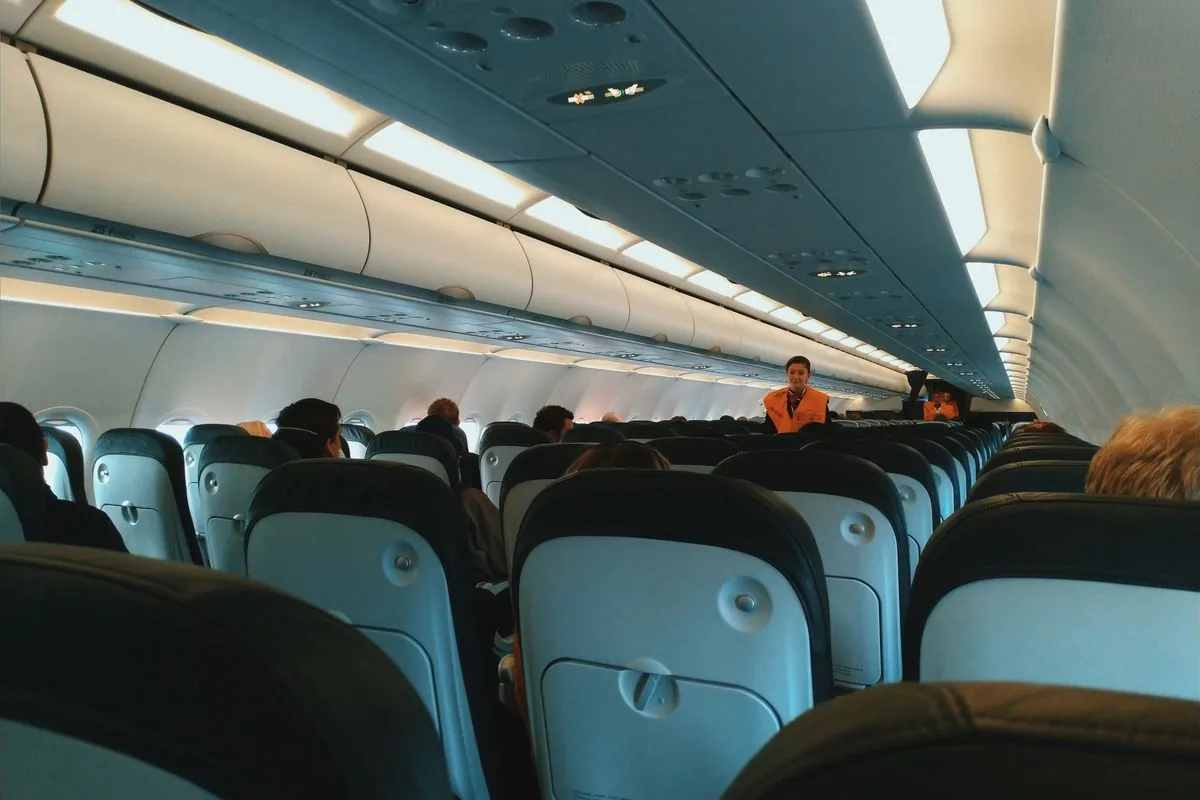
August is the month of long journeys, and sitting for hours with your knees bent shuts down the calf pump and leaves blood pooling in the deep veins. In a healthy person the absolute risk of deep vein thrombosis is low, but it rises after about four hours at a stretch and climbs clearly with a history of thrombosis, thrombophilia, cancer, recent pregnancy or childbirth, oestrogen-containing contraceptives, recent surgery or obesity. The NHS page on deep vein thrombosis sets out the risk factors clearly.
What makes the difference on a long trip is simple:
- Get up and walk a little every hour or hour and a half. In a car, a stop every couple of hours does the same job.
- When you cannot get up, work your ankles: flex and point the foot fifty times or so every half hour.
- Drink water and leave the alcohol and sleeping pills for another occasion.
- Do not spend the trip with your legs crossed or with the edge of the seat pressing into the back of your knee.
- If you have risk factors and your doctor advises it, wear compression stockings for the journey.
Red flags: when to be seen the same day
Some situations do not allow for waiting to see how they develop:
- One leg alone swelling suddenly, especially with calf pain, warmth, redness or a hard feel.
- Calf pain that worsens on walking or on pulling the foot upwards.
- Sudden breathlessness, chest pain on deep breathing, coughing up blood or palpitations. That is an emergency and means calling 112: it can be a pulmonary embolism.
- A wound on the ankle or leg that has not closed in two or three weeks.
- Swelling of both legs that comes on quickly along with breathlessness when lying flat, weight gain over a few days or passing very little urine.
- In pregnancy, sudden swelling of the face and hands with headache or blurred vision.
- A varicose vein that bleeds.
Swollen legs from causes that are not venous
Not all swelling comes from the venous system. It is worth thinking again when both legs are equally affected, when overnight rest does not help or when other symptoms come with it:
- Medicines. Some blood pressure drugs (calcium channel blockers such as amlodipine), anti-inflammatories, corticosteroids and certain hormone treatments swell the legs as a side effect. It is a far commoner cause than people expect, and the treatment must not be stopped on your own: raise it with whoever prescribed it.
- Heart. When the right ventricle does not empty well, fluid gathers in the lower parts of the body. It usually comes with breathlessness on exertion or when lying down. The article on cardiovascular diagnosis with Holter and echocardiography explains how that is investigated.
- Kidneys and liver. They alter blood proteins and the way the body holds on to fluid.
- Thyroid. An underactive thyroid produces swelling of a different consistency, one that does not pit when pressed.
- Lymphoedema. Lymphatic drainage fails and the swelling starts at the top of the foot and the toes.
- Pregnancy. Some swelling is expected, but an abrupt change should be checked.
In these cases a straightforward blood test and a medical assessment point the way quickly, because they let kidney, liver and thyroid function be looked at before anyone assumes the veins are to blame.
How it is investigated: the venous Doppler ultrasound
A physical examination points in a direction, but it cannot see inside the vein. A Doppler ultrasound combines the ultrasound image with the Doppler effect, which measures the speed and direction of blood flow. It is the reference test for the veins of the legs: no needles, no pain and no ionising radiation.
What a venous Doppler ultrasound shows
- Whether blood is travelling upwards as it should or flowing backwards when you stand. That reflux is the hallmark of venous insufficiency.
- Whether the valves close, and how long they take to do it.
- Whether there is a clot inside a deep or superficial vein, where it sits and whether the vein is still open.
- Which specific segments are failing. That map is what shapes any later treatment.
What the test is like and how to prepare
No special preparation is needed. Gel is applied to the skin and a probe is run over the groin, the thigh, the back of the knee and the calf. Part of the examination is done lying down and part standing, because reflux only shows properly when gravity is acting on it. At Clínica Eupnea the test takes 20 to 45 minutes depending on what has to be covered, and the findings are discussed straight away.
When the aim is the full cardiovascular picture (high blood pressure, diabetes, cholesterol, family history), the assessment is handled by the cardiology service in Palamós, which brings the Doppler together with the rest of the tests. If the scan ends up pointing to a procedure on the vein, we direct you to the appropriate service.
What works day to day
No conservative measure closes a valve that has stopped closing, but they all reduce swelling and discomfort:
- Walk. It is the most effective measure and the cheapest. Every step squeezes the calf and pushes blood upwards.
- Cold water on the legs. A cold jet from the ankles upwards at the end of your shower, or a spell walking along the shoreline: cold narrows the vein and the pressure of the water acts as a natural bandage.
- Raise your legs for fifteen or twenty minutes a couple of times a day, above heart level. At night, a few centimetres of lift under the mattress at the foot end.
- Break up the still hours. If you work standing, shift your weight from leg to leg and rise onto your toes now and then; if you work sitting, get up every hour.
- Watch out for direct heat. Full sun on the legs, very hot sand, hot baths, saunas and hot wax hair removal widen the vein further still.
- Salt and weight. Less salt and fewer kilos show up at the ankle before anywhere else.
- Footwear. Neither high heels nor completely flat shoes: both limit ankle movement, and ankle movement is what drives the pump.
Simple exercises to switch the calf pump back on
Three sets of twenty, a couple of times a day, can be done in an aircraft seat, at a petrol station stop or in front of the television:
- Flex and point the foot as if pressing a pedal.
- Circle the ankle in both directions.
- Standing and holding a chair, rise onto your toes and lower again.
- Lying on your back, cycle in the air.
Compression stockings: useful, but not something to start on your own
They are the conservative measure with the strongest backing in venous insufficiency: they reduce swelling and heaviness and, where there is an ulcer, they help it close. The compression has to be graded, though, and the type chosen to suit the case. And there is one check that cannot be skipped: if significant peripheral arterial disease is present, compressing the leg can do harm. That is why the recommendation comes from a professional after an assessment. They go on in the morning, before you get out of bed, and come off at night.
If you want to weigh all this against independent sources, the MedlinePlus page on varicose veins, from the US National Library of Medicine, covers the same territory in accessible language.
Frequently asked questions
Because heat widens the surface veins to shed temperature. A wider vein holds more blood, its valves sit further apart and close less tightly, and some of the fluid ends up seeping into the surrounding tissue. Add hours spent standing or sitting still, more salt than usual and less water than you sweat, and you get the leg swelling that is typical of July and August. In most cases it reverses and clears after a night lying down.
Summer swelling usually affects both legs, shows up in the evening, is worse on muggy days and has gone by morning. It is worth having a look when it no longer clears fully when you get up, when it comes with heaviness, night cramps or itching, or when the skin around the ankle changes colour. And it needs same-day attention if one leg alone swells suddenly, especially with calf pain, warmth or redness.
It does not hurt and needs no special preparation. Gel is applied to the skin and a probe is run over the groin, the thigh, the back of the knee and the calf. Part of the examination is done lying down and part standing, because venous reflux only shows up properly when gravity is working on it. At Clínica Eupnea the test takes 20 to 45 minutes depending on what has to be covered, uses no radiation and the findings are discussed on the spot.
They can be treated. The options run from sclerotherapy to endovenous laser or radiofrequency and conventional surgery, and the choice depends on which vein is failing and by how much. That is why the first step is never treatment but mapping: a venous Doppler ultrasound shows which veins have reflux and which do not. At Clínica Eupnea we carry out the scan and the assessment; if the case calls for a procedure on the vein, we point you to the right service.
Yes. They are the conservative measure with the strongest backing in venous insufficiency: they reduce swelling and heaviness and, where there is an ulcer, they help it close. That said, the compression has to be graded and the type chosen to fit the case, and there is one check that cannot be skipped: if significant peripheral arterial disease is present, compressing the leg can do harm. That is why the recommendation comes from a professional after an assessment. They go on in the morning, before you get out of bed, and come off at night.
The risk is real and rises after about four hours sitting still, although in a healthy person it stays low. It climbs clearly with a history of thrombosis, thrombophilia, cancer, recent pregnancy or childbirth, oestrogen-containing contraceptives, recent surgery or obesity. Getting up every hour, moving your ankles when you cannot get up, drinking water and skipping alcohol cut the risk substantially. Taking aspirin off your own bat is not a recommended preventive measure for this situation.
They are not the treatment for venous swelling and should not be taken on your own initiative. A diuretic makes sense when the fluid retention comes from the heart, the kidneys or the liver, and in those cases a doctor prescribes and monitors it. In venous insufficiency the problem is mechanical rather than a matter of fluid volume: what works there is compression, movement and raising the legs. Taking diuretics without an indication can dehydrate you and upset other things.
Do your legs swell every summer?
At Clínica Eupnea, in Palamós, you can have a venous Doppler ultrasound and find out whether the valves in your veins are closing properly, with no waiting lists or referrals.
Book Appointment