
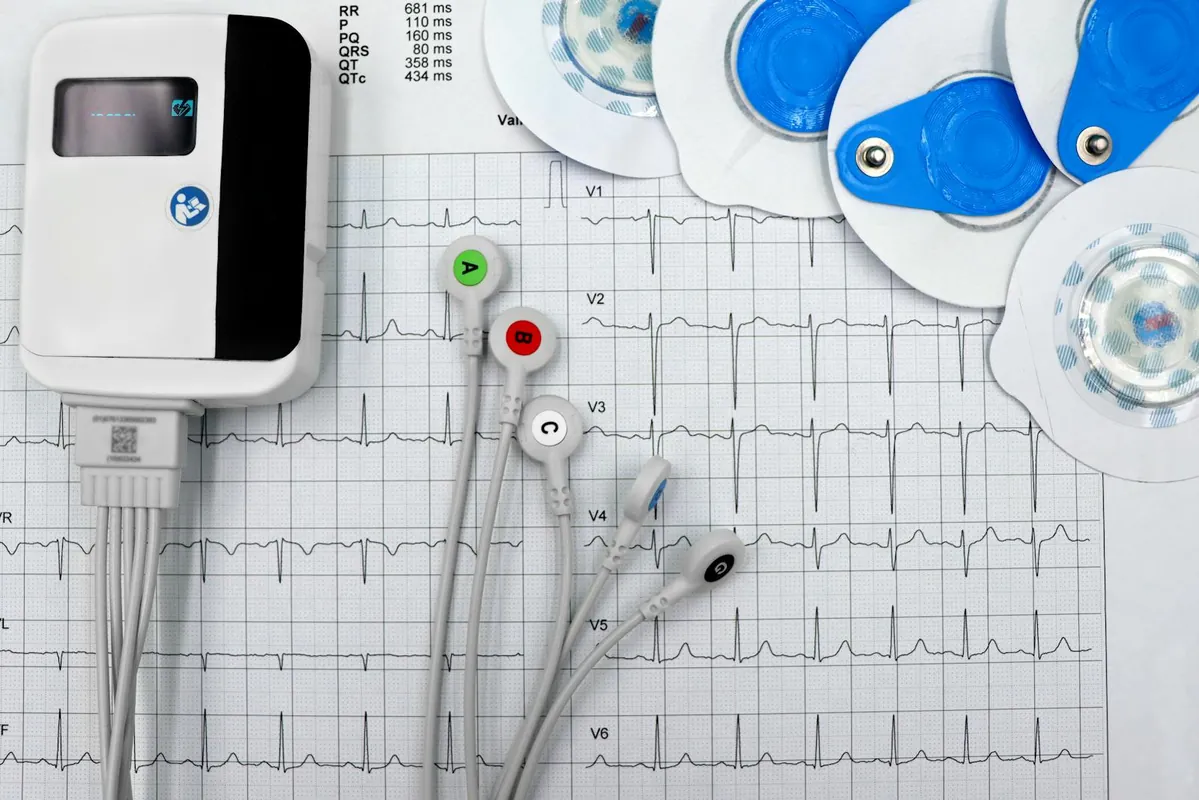
A visit to the cardiologist usually starts with history and an electrocardiogram (ECG). But when symptoms are intermittent or the heart needs assessment beyond a snapshot, we must look further. At Clínica Eupnea, Palamós, we offer three complementary tests that provide a complete cardiovascular picture: ambulatory blood pressure monitoring (ABPM/BP Holter), ECG Holter and echocardiography.
In this article
Key takeaways
- ABPM detects masked and white-coat hypertension
- ECG Holter captures arrhythmias missed in the office
- Echocardiography assesses heart structure and function — radiation-free
- All are non-invasive, ambulatory and well-tolerated
BP Holter (ABPM)
The BP Holter or ABPM (Ambulatory Blood Pressure Monitoring) records your blood pressure every 15-30 minutes for 24 hours. It detects:
- Masked hypertension: normal in clinic but high at home
- White-coat hypertension: high only in clinic
- Nocturnal hypertension: non-dipper pattern, associated with higher risk
- Antihypertensive efficacy across day and night
It is the reference test to confirm hypertension diagnosis and tune therapy.
ECG Holter
The ECG Holter records heart electrical activity for 24 hours (or longer) during normal life. It detects:
- Intermittent arrhythmias (paroxysmal AF, frequent extrasystoles)
- Symptomatic bradycardia or tachycardia
- Sinus pauses and blocks
- Cause of palpitations, dizziness or syncope
- Rate control assessment in known atrial fibrillation
The device is lightweight, with a small battery, and does not interfere with normal activity.
Echocardiography (heart ultrasound)
Echocardiography uses ultrasound to visualise heart chambers, valves and contractile function. Non-invasive and radiation-free, it takes 15-30 minutes. It diagnoses and follows:
- Heart failure and ejection fraction
- Valvulopathies (stenosis, regurgitation)
- Ventricular hypertrophy
- Congenital heart disease
- Pericarditis and pericardial effusion
- Post-infarct heart assessment
Which test for which symptom?
- Variable or hard-to-control BP → ABPM
- Palpitations or intermittent dizziness → ECG Holter
- Chest pain, dyspnoea, family history of heart disease → echocardiography
- Comprehensive preventive screening → all three combined
When to book a cardiology appointment?
With palpitations, chest pain, dyspnoea on light effort, dizziness, syncope or repeatedly high BP, book a visit. An integrated assessment can catch cardiovascular problems early and prevent serious complications.
Need a complete cardiovascular diagnosis?
Cardiology at Clínica Eupnea Palamós: BP Holter, ECG Holter and echocardiography with specialist report.
Book Appointment