
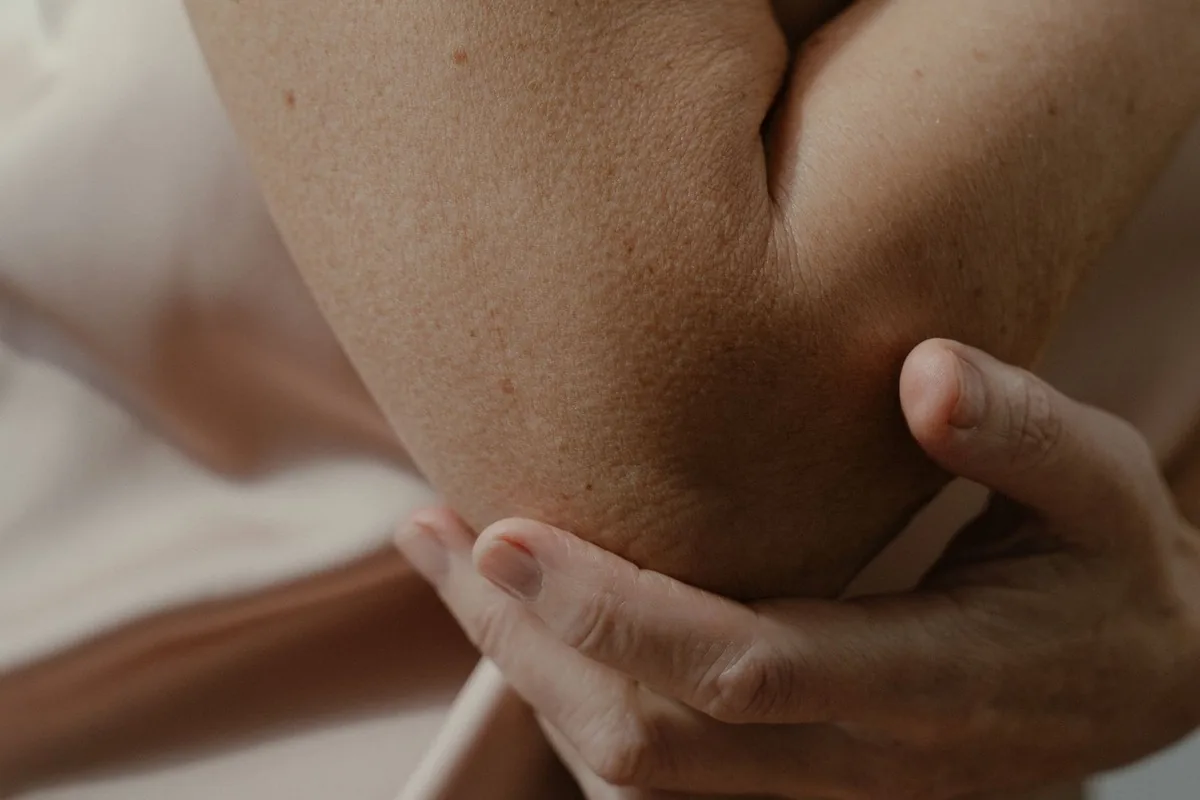
Some people know winter has arrived before they look at the calendar. The plaques on their elbows, knees or scalp, which had almost gone over the summer, come back with the first cold nights. It is not just a feeling: the MSD Manual notes that sudden psoriasis flare-ups are more common in winter, after drinking alcohol and at stressful times.
29 October is World Psoriasis Day, organised by the International Federation of Psoriasis Associations since 2004. We are using it to explain why the cold makes the condition worse, how to recognise it and tell it apart from other scaly scalp conditions, which treatments work today, what you can do at home to have fewer flare-ups and when it is worth booking an appointment with a dermatologist.
What you will find in this article
The key points in thirty seconds
- Psoriasis is a chronic inflammatory skin disease and it is not contagious. In Spain its prevalence is estimated at 2.3%, more than a million people.
- In winter several triggers come together: dry air, central heating, less sunlight, more infections and festive excesses.
- Plaques mostly appear on the elbows, knees, scalp and lower back, and psoriasis can also affect the nails.
- Between 5% and 30% of people with psoriasis develop psoriatic arthritis. Joint pain or stiffness should be mentioned at your appointment.
- Treatment starts with creams (corticosteroids and vitamin D derivatives). If that is not enough, there is phototherapy, oral medication and biologic drugs.
- At home, what helps most is moisturising your skin every day, taking short lukewarm showers and not stopping treatment when the plaques improve.
What psoriasis is and who gets it
The NHS describes psoriasis as a common skin condition that cannot be cured and cannot be caught from other people. It is a chronic inflammatory disease caused by a problem with the immune system that speeds up skin renewal: cells that normally take a month to reach the surface get there in a few days, build up and form reddish plaques covered with whitish scales.
It is common. In its 2016 global report, the World Health Organization estimated that it affects at least 100 million people worldwide. In Spain, the reference study, based on interviews with 12,711 people and published in 2014, estimated a prevalence of 2.3%, with no difference between men and women. It becomes more common with age and peaks between 60 and 69, although it often starts in young adults.
There is a genetic predisposition, and it is not unusual for several people in the same family to have it. Triggers act on top of that: infections, skin injuries, some medicines or stress can cause a first episode or make the disease worse. There is no definitive cure, but there can be long periods when the plaques disappear.
Why psoriasis gets worse in winter
The MSD Manual puts it this way: flare-ups are more common in winter and symptoms often improve in summer, when the skin gets sunlight. There are data to back this up. A team at Massachusetts General Hospital followed 5,468 patients with psoriasis in New England for three years: the share with clear or almost clear skin was highest in summer (20.4%), and the share with moderate or severe psoriasis was highest in winter (40.5%).
Two caveats before generalising. New England has much harsher winters than the Costa Brava, and the authors themselves warned that the result may not apply to climates with less contrast between seasons. And not every study finds this pattern. What is well described are the mechanisms that explain why it happens to so many people.
Dry air and central heating
Cold air holds little moisture, and central heating dries the air indoors even more. The skin loses water, cracks and itches. Scratching has a consequence worth knowing about: in psoriasis, a wound or a scratch can make a new plaque appear in exactly that spot. Dermatologists call it the Koebner phenomenon, which is why the American Academy of Dermatology lists scratches, shaving cuts and even tattoos among the triggers.
Fewer hours of sunlight
Ultraviolet light slows down the accelerated multiplication of skin cells, which is why phototherapy is one of the treatments for psoriasis. In winter there are fewer hours of daylight and the skin stays covered, so that effect is lost. That does not mean sunbathing is a treatment: sunburn also triggers flare-ups.
Infections, stress and the festive season
Autumn and winter are the season for colds, flu and sore throats. A streptococcal throat infection can trigger guttate psoriasis, and any infection can reawaken psoriasis that was under control. December adds big meals, alcohol and stress, which are also on the list of triggers.
Psoriasis symptoms: how to recognise it
The typical form is red plaques or pink patches, well defined and covered with white or silvery scales, which can itch or sting. They mostly appear on the elbows, knees, lower back and scalp. On darker skin the plaques can look purple, brown or grey, and they are harder to see.
The nails can be affected too: small pits on the surface, thicker nails or nails that lift away from the nail bed. It is worth paying attention, because nail changes can be a sign of psoriatic arthritis.
Types of psoriasis
- Plaque psoriasis: the most common type, with the typical plaques on elbows, knees and back.
- Guttate psoriasis: lots of small spots scattered over the body, often after a throat infection.
- Inverse psoriasis: in skin folds (armpits, groin, under the breasts), with red, smooth skin and hardly any scales.
- Pustular psoriasis: with pustules that are not infectious. It is uncommon.
- Erythrodermic psoriasis: redness over almost all of the skin. It is very rare and can be serious.
Scalp psoriasis or seborrhoeic dermatitis?
On the head, psoriasis is often confused with seborrhoeic dermatitis and with dandruff. All three cause flaking, but they are not the same and are not treated the same way. These are the differences that help you tell them apart:
| What to look at | Psoriasis | Seborrhoeic dermatitis | Dandruff |
|---|---|---|---|
| What it looks like | Thick, well-defined plaques with white or silvery scales | Redness with fine, greasy, yellowish scales | Fine scales without redness |
| Where it appears | Can extend beyond the hairline, onto the forehead, the nape of the neck and behind the ears | Scalp, eyebrows, sides of the nose and behind the ears | Only on the scalp |
| Other clues | Plaques on the elbows or knees, nail changes | Does not affect the nails | Improves with an anti-dandruff shampoo |
For guidance only. Flaking that does not improve with anti-dandruff shampoo within a few weeks is worth a visit.
Some cases share features of both, and dermatologists call this sebopsoriasis. That is why the diagnosis is made by a dermatologist looking at the skin. If you want to know more about the other condition, read our article on seborrhoeic dermatitis.
When psoriasis goes beyond the skin
Psoriatic arthritis
According to the MSD Manual, between 5% and 30% of people with psoriasis end up with psoriatic arthritis, an inflammation of the joints that causes pain, swelling and stiffness. In most cases it appears after the plaques, but not always. If you have joint pain that comes and goes, stiffness when you get up or a whole finger that swells, mention it at your appointment even if your skin is fine. Picking it up early makes it possible to choose a treatment that also protects the joints.
The heart, metabolism and mood
Psoriasis is an inflammatory disease that does not stay in the skin. France's National Institute of Health and Medical Research (Inserm) puts the increase in cardiovascular risk at about 25%, independently of the classic risk factors, and the proportion of people with severe psoriasis who have depression at 30-40%. It is also linked to type 2 diabetes and excess weight.
In practice this means two things. First, it is worth keeping an eye on your blood pressure, blood sugar and cholesterol as consistently as on the plaques, and if there are other risk factors, the cardiology clinic can help. Second, if psoriasis is affecting your mood, sleep or relationships, do not keep it to yourself: support from a psychologist is also part of treatment.
Psoriasis treatment: from creams to biologics
Psoriasis has no definitive cure, but there are treatments that control it very well. Catalonia's public health portal, Canal Salut, groups them into three families: topical treatments, phototherapy and systemic treatments. The choice depends on how much skin is affected, where, and how much it affects your daily life. A practical way to estimate the extent: the palm of your hand, including the fingers, is about 1% of your body's surface.
Creams and topical treatments
They are the first option in most mild and moderate cases. The most widely used are topical corticosteroids and vitamin D derivatives, alone or combined in the same product. For the scalp there are shampoos, lotions and foams, and milder preparations are chosen for the face and skin folds. They work if they are used as prescribed, and it is best not to stop them on your own when the plaques start to improve.
Phototherapy
Phototherapy with ultraviolet B (UVB) light is an option when the plaques cover a large area or do not improve with creams. It is given at a healthcare centre, usually two or three sessions a week for several weeks, with controlled doses. It has nothing to do with sunbeds, which are not recommended.
Oral medication and biologic drugs
When psoriasis is extensive, affects sensitive areas such as the face, hands or genitals, or comes with arthritis, the dermatologist may suggest a systemic treatment. Some are taken by mouth, such as methotrexate, ciclosporin, acitretin or apremilast, and then there are biologic drugs, which are given by injection and block specific parts of the inflammation, such as TNF, IL-17 or IL-23. According to the MSD Manual, biologics tend to be the most effective option for severe psoriasis. All of them need monitoring: blood tests are done before starting and at regular intervals during treatment.
Home care to get through winter with fewer flare-ups
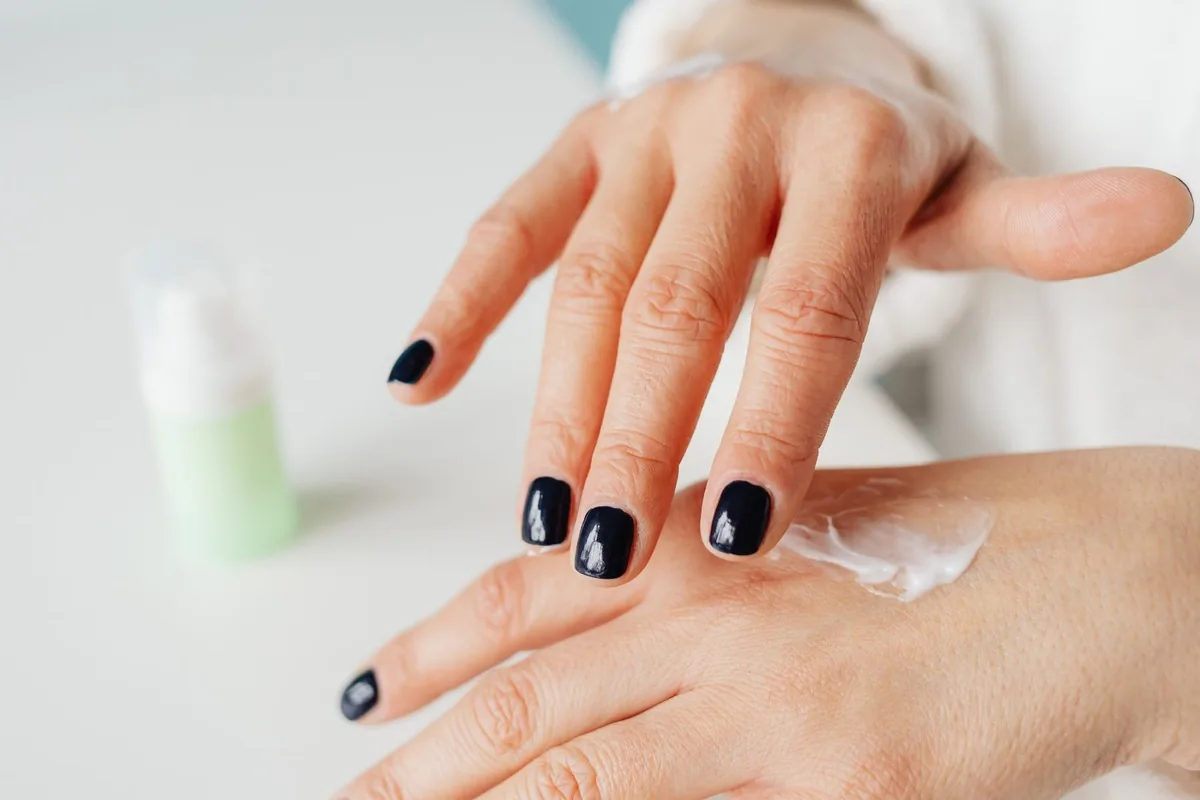
These measures do not replace treatment, but they support it. Most are recommendations from the American Academy of Dermatology and Canal Salut:
- Moisturise all your skin every day, paying extra attention to the plaques. In winter, thick creams or fragrance-free ointments work better than lotions.
- Short, lukewarm showers, ten minutes at most, with a gentle wash instead of soap. Pat yourself dry without rubbing and put the cream on straight away, while your skin is still slightly damp.
- A humidifier if the air at home is very dry. And do not sit so close to the radiator or fire that you can feel the heat on your skin.
- Cotton clothing next to the skin. Wool and synthetic fibres can make itching worse.
- Do not scratch or pick off the scales. If it itches, a cool damp cloth or a little moisturiser will ease it without breaking the skin.
- Be careful around fire. Paraffin-based creams soak into clothing and bedding and make them burn more easily, so do not smoke or go near naked flames with the cream on.
- Keep colognes and perfumes off your skin.
- Treat infections of the throat and ears, and do not abandon your treatment on your own when the plaques improve.
What helps the rest of your health also helps here: not smoking, drinking little alcohol and keeping to a healthy weight. Canal Salut also suggests eating less meat and animal fat and more oily fish. And sunshine in moderation: a little exposure on the days when it is possible suits many people, but without ever getting burnt, and if you are having phototherapy, ask first.
Myths about psoriasis worth setting straight
"It is contagious." No. Psoriasis is not passed on through contact, in swimming pools or by sharing towels. Knowing this saves people with psoriasis a lot of awkward looks.
"Vitamin D tablets will clear it." Creams with vitamin D derivatives are a first-line treatment, but tablets are something else. In a clinical trial published in 2023, carried out in Tromsø (Norway) over two winters, 122 adults with psoriasis and low vitamin D took supplements or a placebo for four months, and the severity of their plaques did not differ between the two groups. The authors acknowledge that most had mild psoriasis, which left little room to see a difference. If your vitamin D is low, it is worth correcting for other reasons, which we explain in our article on low vitamin D in a blood test.
"It is all down to nerves." Stress can trigger a flare-up, but the cause is immune and there is a genetic predisposition. Nobody has psoriasis because they cannot handle stress.
"Diet has nothing to do with it." It depends. No diet cures psoriasis, but weight matters. In an Italian trial with 303 overweight or obese patients with moderate or severe psoriasis who were already on systemic treatment, those who followed 20 weeks of diet and exercise reduced their severity score (PASI) by a median of 48%, compared with 25.5% among those who only received advice. If you need to lose weight, our dietetics and nutrition clinic can help with a realistic plan.
When to see a dermatologist
Book an appointment if any of these apply to you:
- You have plaques that will not go away and you do not have a diagnosis yet.
- The treatment you are using no longer works or is causing side effects.
- You notice pain, swelling or stiffness in your joints.
- The itching keeps you awake or psoriasis is affecting your mood.
- You want to get pregnant and you are on a systemic treatment: some medicines need to be changed beforehand.
When not to wait for an appointment
If your skin suddenly turns red over large areas and pus-filled bumps appear and join together, especially if you have a fever, chills or a racing heart, go to the emergency department. The NHS treats this as an emergency because it can be a severe form of psoriasis or an infection.
How we treat psoriasis at Clínica Eupnea
In Palamós, psoriasis is looked after by Dra. Teresa Martín-Urda from our dermatology service. At the appointment the plaques, nails and scalp are examined, and we go over your triggers, the treatments you have already tried and whether you have any joint problems.
Psoriasis clinic in Palamós
The diagnosis is clinical: an examination is usually enough, and only occasionally is a small biopsy needed to rule out other conditions. From there, treatment is agreed with you. The service offers topical treatments, phototherapy and oral medication, and in moderate or severe cases we assess whether you are a candidate for biologic treatment. If you have joint pain, the dermatologist will refer you to rheumatology.
Because psoriasis is linked to weight, the heart and mood, the same centre also offers dietetics, cardiology, psychology and follow-up blood tests. To book, call 872 21 75 91 or send a WhatsApp message, Monday to Friday from 9.00 to 13.30 and from 15.30 to 19.30. If you are interested in other skin problems, see our guide to dermatology and skin care.
Frequently asked questions
No. Psoriasis is an inflammatory disease of immune origin and it is not passed on through contact, by sharing towels or in swimming pools. There is a genetic predisposition, which is why several people in the same family sometimes have it, but that has nothing to do with contagion.
Because several triggers come together. Cold air and central heating dry out the skin, there is less sunlight, which slows down the accelerated renewal of the skin, and infections and stress increase. The MSD Manual notes that flare-ups are more common in winter and that symptoms often improve in summer, although this does not happen to everyone or with the same intensity.
There is no definitive cure, because it is a chronic disease, but there are treatments that control it very well and many people go for long periods without plaques. The aim is to find the treatment that leaves your skin clear or almost clear with as few side effects as possible.
There are two levels. The basis is a fragrance-free moisturiser or emollient, every day and all over the skin. On top of that, the dermatologist prescribes medicated creams, mainly topical corticosteroids and vitamin D derivatives, alone or combined. The strength is chosen according to the area: milder preparations are used on the face and in skin folds.
Psoriasis forms thicker, well-defined plaques with white or silvery scales that can extend beyond the hairline, and there are often plaques elsewhere or nail changes. Seborrhoeic dermatitis causes fine, greasy, yellowish scales, also on the eyebrows and the sides of the nose. Sometimes they overlap, and the diagnosis is made by a dermatologist.
Yes. According to the MSD Manual, between 5% and 30% of people with psoriasis develop psoriatic arthritis, with pain, swelling and stiffness in the joints. If you notice joint pain that comes and goes, stiffness when you get up or a whole finger that swells, mention it at your appointment even if your skin is fine.
The evidence does not support it. In a clinical trial carried out in Norway over two winters, 122 adults with psoriasis and low vitamin D took supplements or a placebo for four months, and the severity of their psoriasis did not change. Creams with vitamin D derivatives are a different matter and are an effective treatment.
Having a psoriasis flare-up this winter?
At Clínica Eupnea in Palamós the dermatologist will see you, review your treatment and, if needed, suggest phototherapy or oral medication.
Book an Appointment