
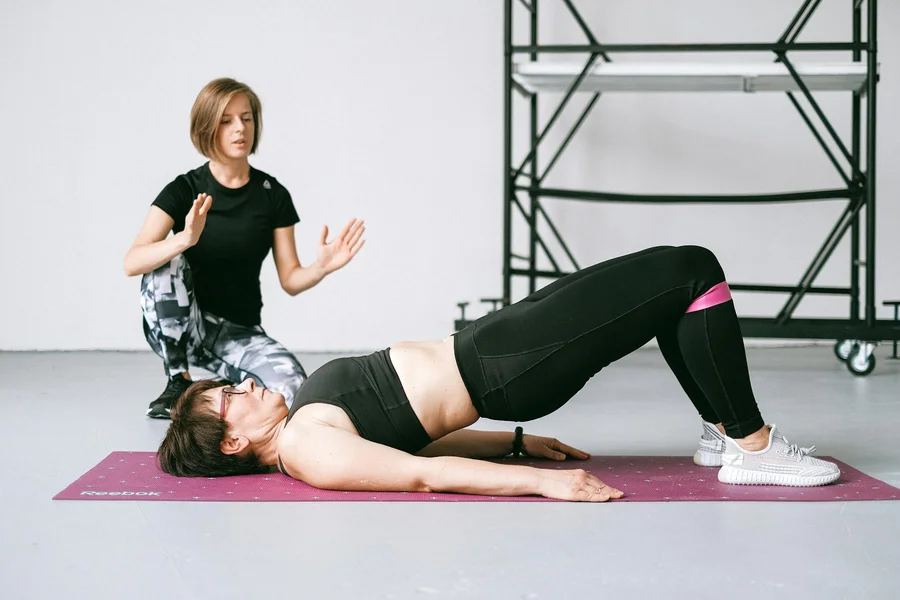
Pelvic floor physiotherapy treats and prevents dysfunctions of the muscle group supporting pelvic organs. Key after childbirth, in incontinence and many gynaecological disorders.
In this article
Key takeaways
- Recommended postpartum and in menopause
- Treats incontinence, prolapse, pain
- Includes exercises, massage and biofeedback
- Can avoid surgery
- Prevention is as important as treatment
What it treats
- Urinary incontinence
- Faecal incontinence
- Pelvic organ prolapse
- Chronic pelvic pain
- Sexual dysfunction
- Postpartum recovery
When it's needed
- After childbirth (vaginal or caesarean)
- Urine leakage with laughing, coughing or jumping
- Sensation of pelvic heaviness
- Pain during intercourse
- Chronic constipation
- Birth preparation
What a session is like
Starts with external assessment and, if needed, internal. Works with exercises, massage, electrostimulation and biofeedback. Sessions last 45-60 minutes; usually 6-10 needed.
Benefits
Reduction or disappearance of incontinence, better postpartum recovery, prolapse prevention, better sex life, reduced pelvic pain.
Myths to bust
- 'Only for women' — false, men also need it
- 'Incontinence is normal after birth' — no, it has a solution
- 'Useless in menopause' — yes it is, very useful
- 'Kegels alone are enough' — often no, guided sessions needed
Do you need pelvic floor physiotherapy?
The physiotherapy team at Clínica Eupnea offers specialised sessions with personalised assessment.
Book Appointment