

At a summer dinner on a terrace, with music in the background and four conversations crossing the table, there is always someone smiling and nodding without having caught half of what was said. At home he has the TV two notches louder than everyone else. On the phone he says «sorry?» every third sentence. He doesn't think his hearing is poor: he thinks people mumble.
Hearing loss rarely arrives all at once. It settles in over years, the brain compensates as best it can, and the people around notice long before the person affected. According to the World Health Organization, more than 25 % of people over 60 have disabling hearing loss. And many of those who have it don't know, because they have never had a hearing test.
What you will find in this article
- Early signs of hearing loss
- Types of hearing loss
- The most common causes
- Tinnitus: the ringing that often comes with it
- Sudden hearing loss: when it is an emergency
- What audiometry is and how it is done
- Hearing loss in children
- Poor hearing and memory: what we know
- Treatment: from earwax to hearing aids
- How to protect your hearing
- When to see an ENT specialist
- Frequently asked questions
The key points in thirty seconds
- The first sign isn't «I can't hear»: it is losing track of conversations in background noise and asking people to repeat things.
- More than 25 % of people over 60 have disabling hearing loss, according to the WHO.
- Earwax is one of the most common causes and one of the easiest to fix. Cotton buds make it worse.
- From 85 decibels upwards, long or repeated exposure damages the ear permanently.
- Sudden hearing loss in one ear is an emergency: treatment works best in the first two weeks.
- Audiometry takes 20-30 minutes, doesn't hurt and needs no preparation.
Early signs of hearing loss
Gradual loss shows up first in difficult listening situations, not in quiet rooms. The commonest signs are asking people to repeat themselves, mishearing words that sound alike, struggling to follow a conversation in a restaurant, a meeting or a family lunch, hearing voices without quite making out the words, needing the TV or radio louder than others do and finding phone calls hard. The NHS page on hearing loss lists the most common of them. Many patients add a tiredness they couldn't explain: listening with effort for hours is exhausting.
What others notice before you do
Age-related loss affects high-pitched sounds first, and high pitches are precisely the consonants that tell one word from another. So the person hears that someone is speaking but misses the message, and ends up blaming other people's diction. The family, meanwhile, sees the answers that don't fit and the volume of the TV. If you have been told more than once, that is reason enough to get tested.
Types of hearing loss
There are two broad families, and telling them apart changes the outlook completely. Conductive hearing loss happens when sound doesn't reach the inner ear properly because something holds it back in the ear canal, the eardrum or the middle ear: earwax, fluid behind the eardrum, a perforation or an ear infection. Many of these causes can be fixed. Sensorineural hearing loss happens when sound does arrive but the cells of the inner ear or the nerve fail to turn it into a signal; this is the loss that comes with age and with noise, and it doesn't regenerate today, but it can be compensated for. When both are present it is called mixed hearing loss. The MSD Manual entry on hearing loss explains the difference well.
The most common causes
Earwax: the easiest to fix
Earwax isn't dirt: it protects and moisturises the ear canal. Sometimes it builds up and blocks the canal, causing a blocked feeling, ringing, an obvious drop in hearing and sometimes dizziness. It is one of the most common causes of treatable hearing loss, especially in older people. The classic mistake is going after it with cotton buds, which pack it in even tighter; we cover this in detail in the article on swimmer's ear.
Noise: damage that gives no warning
Below 70 decibels the ear comes to no harm even with long exposure, but from 85 upwards, prolonged or repeated exposure can cause permanent damage. A concert or headphones at full volume sit between 94 and 110 decibels, and a fireworks display between 140 and 160, according to the US National Institute on Deafness and Other Communication Disorders. After a night at a summer festival it is normal for your ears to feel muffled and to ring for a day or two, and that is the trap: the fact that it goes away doesn't mean no damage was done. The WHO estimates that more than a billion young adults are at risk of permanent, avoidable hearing loss from unsafe listening habits.
Age
Presbycusis, the hearing loss that comes with ageing, is gradual, affects both ears equally and starts with high pitches. It is neither rare nor a fate to be accepted in silence: along with earwax, infections and noise, it is one of the most common causes of hearing loss, and it can be treated with hearing rehabilitation.
Ear infections and fluid behind the eardrum
Repeated ear infections and the fluid that lingers in the middle ear after a cold cause conductive hearing loss which, in children, can go unnoticed for weeks. A perforated eardrum, Ménière's disease and some medicines complete the list of causes checked in clinic.
Tinnitus: the ringing that often comes with it
A ringing, buzzing or background hum that doesn't come from outside. Tinnitus affects roughly one adult in seven according to the largest meta-analysis published so far, and is severe in about 2 %. It isn't a disease in itself but a symptom, which can come from noise, from a hearing loss the person hasn't noticed yet, from stress or from vascular problems. That is why, when tinnitus lasts for weeks, the first test is audiometry. Two details should always be mentioned at the appointment: whether it is in one ear only and whether it beats in time with your pulse.
Sudden hearing loss: when it is an emergency
Most hearing loss is slow. There is one exception worth knowing about: sudden sensorineural hearing loss, in which one ear loses hearing in a matter of hours or a few days, sometimes with ringing or a feeling of fullness. Many people assume it is earwax or a cold-blocked ear and let precious days go by.
Don't wait to see if it passes
If you have suddenly lost hearing in one ear, with no pain and no obvious cause, get assessed the same day. The American Academy of Otolaryngology clinical guideline recommends confirming it with audiometry as soon as possible and at the latest within 14 days, and offering corticosteroids within the first two weeks. Between a third and two thirds of patients recover hearing, but time is not on your side.
What audiometry is and how it is done
Audiometry is the test that measures how much and how well you hear. At Clínica Eupnea it is carried out by the ENT specialists with calibrated equipment in a quiet setting, and it has several parts that complement each other.
Pure-tone audiometry
Wearing headphones, you hear pure tones at different frequencies, from a low 250 Hz to a high 8,000 Hz, and signal when you hear each one. The result is the audiogram, a chart showing how loud each frequency has to be for you to hear it and whether the loss is conductive or sensorineural.
Speech audiometry
Words instead of tones. It measures what percentage you understand at different volumes, which is what really matters in everyday life, and it is key to deciding whether a hearing aid will help and to monitoring progress.
Impedance audiometry (tympanometry)
It looks at how the eardrum moves and how the middle ear works, and includes the stapedial reflexes. This is the test that picks up fluid behind the eardrum, Eustachian tube dysfunction or a perforation.
How hearing loss is diagnosed at Clínica Eupnea
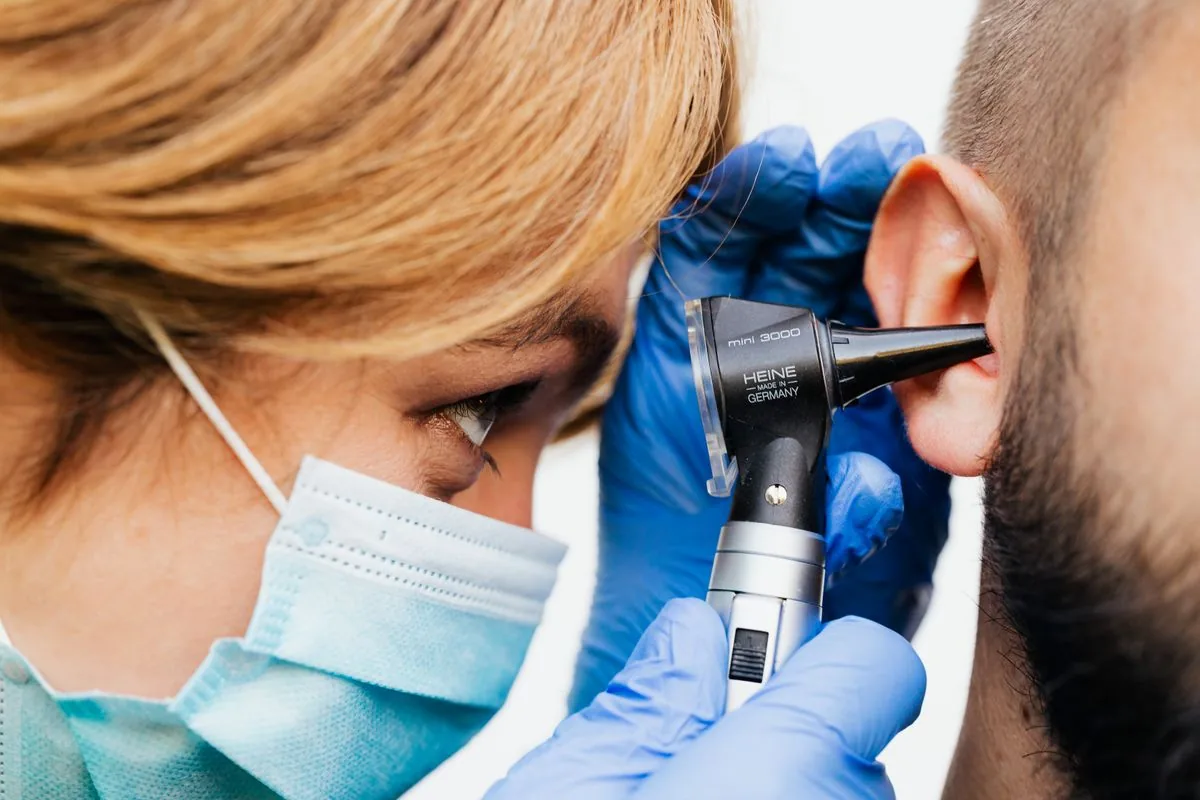
First, an examination of the ear with an otoscope, which rules out earwax or an infection in seconds. Then the audiometry, which takes about 20 to 30 minutes, doesn't hurt and needs no preparation. The result is interpreted on the spot and discussed with you by Dr Anna Juanola or Dr Josep Ibáñez, specialists in the ENT department. For hearing screening, the department also uses otoacoustic emissions.
Hearing loss in children
A child who can't hear well won't tell you: they get distracted, answer the wrong question, turn the tablet up, seem to «not listen» or have speech that develops more slowly. With the return to school and the first colds of autumn, it is sometimes the teacher who spots it. According to the WHO, almost 60 % of hearing loss in children is due to avoidable causes, and among the commonest are repeated ear infections and fluid in the middle ear, often linked to enlarged adenoids. Undetected hearing loss can delay speech development, so it is worth raising with the paediatrics service or directly with the ENT if you have doubts. The WHO fact sheet on deafness and hearing loss sets out these figures and the causes at each stage of life.
Poor hearing and memory: what we know
The link between hearing and dementia is real and worth explaining without overselling it. The 2024 Lancet Commission on dementia prevention places hearing loss among the weightiest modifiable risk factors, accounting for 7 % of preventable risk. However, when the ACHIEVE trial gave hearing aids and hearing support to 977 people aged 70 to 84, it found no difference in cognitive decline across the whole group after three years. It did find one in the subgroup with more risk factors, where decline was 48 % slower. The cautious conclusion is that treating hearing loss is worth it in its own right and, for some people, may bring an extra benefit.
Treatment: from earwax to hearing aids
It depends on the cause, which is why buying an amplifier online before knowing it makes little sense. Earwax has a simple solution. An ear infection or fluid behind the eardrum is treated, and hearing usually comes back. If a deviated septum or adenoids are contributing, that is assessed. And when the loss is sensorineural and gets in the way of conversations, social life or work, the ENT specialist determines its degree and recommends the most suitable type of hearing aid. There is no point waiting years to have it looked at: the sooner the degree of loss is known, the sooner a decision can be made.
How to protect your hearing
The WHO and International Telecommunication Union standard for personal listening devices sets 80 decibels for 40 hours a week as the reference for adults, and 75 for children; turn it up to 90 and the safe allowance drops to around four hours a week. In practice: keep headphone volume low, wear earplugs at concerts, clubs and fireworks, take breaks from noise at work and keep cotton buds out of your ears.
When to see an ENT specialist
It is worth booking if the people at home have told you more than once that you don't hear well, if you struggle to follow conversations in noise, if you have had ringing for weeks, if a blocked ear hasn't cleared in a few days, if you have worked in noise for years or if you are over 60 and have never had a hearing test. If the loss was sudden, don't book: get assessed the same day. At Clínica Eupnea in Palamós you can have an audiometry test and get the result explained by the specialist at the same visit. For other ear, nose and throat problems, see our guide to ear infections, sinusitis and voice problems.
Frequently asked questions
The first signs are rarely «I can't hear». They are asking people to repeat themselves, mishearing particular words, having the TV louder than the rest of the household, struggling to follow a conversation when there is background noise or on the phone, and feeling worn out after meetings and dinners. Very often the family notices before the person does. If you recognise two or three of these, an audiometry test will settle it in half an hour.
It doesn't hurt at all and needs no preparation. You put on headphones in a quiet setting and signal whenever you hear a sound; then comes the speech part, with words, and if needed an impedance test that measures how the eardrum moves. The whole thing takes about 20 to 30 minutes and the specialist explains the result when you finish.
Treat it as an emergency and don't wait to see if it passes. Sudden sensorineural hearing loss, often mistaken for earwax or a cold-blocked ear, has a better chance of recovery if it is diagnosed and treated early. The American Academy of Otolaryngology clinical guideline recommends confirming it with audiometry as soon as possible and at the latest within 14 days, and corticosteroid treatment is offered within the first two weeks. Between a third and two thirds of patients recover hearing, but nobody can tell in advance which group they will fall into.
No. A cotton bud pushes the wax further in, packs it against the eardrum and can injure the ear canal. The NHS advises against putting fingers or any object in your ears and points out that ear candles have no evidence behind them. As a home measure it suggests 2 to 3 drops of olive oil, 3 to 4 times a day for 3 to 5 days, and getting help if it hasn't cleared after 5 days or if the ear is so blocked you can't hear anything.
Not always, but the two very often go together. Tinnitus affects roughly one adult in seven and can come from noise, stress or vascular problems, but it is often linked to a hearing loss the person hasn't noticed yet. That is why any ringing that lasts for weeks deserves an audiometry test. If you only hear it in one ear, or it beats in time with your pulse, say so clearly at the appointment.
Below 70 decibels the ear copes fine even with long exposure. From 85 upwards, long or repeated exposure can cause permanent hearing loss. Normal conversation is 60 to 70 decibels; a concert or headphones at full volume, 94 to 110; a fireworks display, 140 to 160. The WHO standard for listening devices puts the limit at 80 decibels for 40 hours a week for adults, and 75 for children, and every step up in volume eats into that allowance quickly.
The honest answer is: perhaps, in some people. Hearing loss is one of the weightiest modifiable risk factors for dementia, and the 2024 Lancet Commission attributes 7 per cent of preventable risk to it. But the large trial that put it to the test, with 977 people aged 70 to 84, found no difference across the whole group after three years. It did find 48 per cent slower decline in the subgroup with more risk factors. The useful message is that treating hearing loss is worth it in order to hear better, and any cognitive benefit is a bonus, not a guarantee.
Struggling to follow conversations?
At Clínica Eupnea in Palamós we do the audiometry in half an hour and the ENT specialist explains the result at the same visit.
Book an Appointment