
Every October buildings light up in pink and social media fills with ribbons, and the gynaecology clinic gets some very specific questions. This lump I have noticed for a few days, should it be checked? How often should I have a mammogram? Is self-examination any use? And if breast cancer can be cured when it is caught early, why is there so much debate about screening?
Here are the answers, with the figures in front of you: which signs should be checked without delay, what the evidence really says about self-examination, how the mammogram programme works in Catalonia, what changes with the extension approved this year and when a breast ultrasound makes sense.
What you will find in this article
- Why October is about breast cancer
- Warning signs
- Self-examination: what the evidence says
- Who is at higher risk
- Screening in Catalonia
- Mammogram and breast ultrasound
- If you find a lump
- What you can do to lower the risk
- Breast cancer in men
- How we look into it at Clínica Eupnea
- Frequently asked questions
The key points in thirty seconds
- Breast cancer is the most common cancer in women in Spain: SEOM and REDECAN estimate 38,318 cases in 2026.
- The signs to get checked are a lump or thickening, often painless, changes in shape or skin, changes to the nipple and unusual or bloody discharge.
- Most breast lumps are not cancer, but they still need checking, even if they do not hurt.
- In Catalonia the public programme invites women aged 50 to 69 for a free mammogram every two years.
- In May 2026 Spain approved extending screening nationwide to women aged 45 to 74, to be phased in gradually.
- A breast ultrasound does not replace a mammogram: it complements it, especially in dense breasts and to look at a specific lump.
Why October is about breast cancer
19 October is World Breast Cancer Day, and the whole month is used to repeat a simple idea: the earlier it is found, the easier it is to treat. The figures explain why. According to the World Health Organization, 2.4 million women were diagnosed with breast cancer worldwide in 2024, and it was the most common cancer in women in 164 of the 186 countries analysed. In countries with very high human development, one woman in twelve will have it at some point in her life.
In Spain, the report Las cifras del cáncer en España 2026 estimates 38,318 new cases this year, and the five-year net survival of women diagnosed between 2013 and 2017 is 86%. That high survival is largely the result of early diagnosis.
Breast cancer warning signs
The WHO lists the changes that should send you to a doctor:
- A lump or thickening in the breast, often painless.
- A change in the size, shape or appearance of the breast.
- Dimpling, redness, pitting or other changes in the skin.
- A change in the appearance of the nipple or the skin around it, the areola.
- Unusual or bloody discharge from the nipple.
Check the armpit too: breast cancer can spread to the nearby lymph nodes under the arm, and a lump in the armpit that does not go away deserves an assessment.
Two things worth keeping clear: most breast lumps are not cancer, but a lump that does not hurt is not necessarily benign. That is why the advice is to get it checked anyway, and soon.
Self-examination: what the evidence says
For years all women were told to examine their breasts every month using a set technique. The evidence has nuanced that. The Cochrane review on self-examination looked at two large trials, in Russia and Shanghai, involving 388,535 women: those taught to examine themselves did not have lower breast cancer mortality, and nearly twice as many of them had biopsies that turned out benign (3,406 against 1,856).
The conclusion is not that you should never check yourself, but that routine self-examination does not replace screening. What does work, and what the WHO recommends today, is knowing what your breasts are normally like and seeing a doctor when you notice a change.
How to know your breasts without becoming obsessive
No ritual is needed. Looking in the mirror now and then, arms down and then raised, and noticing how your breasts feel in the shower is enough for a change not to slip past you. One reassuring detail: according to the NHS, breast pain on its own is not usually a symptom of cancer. And if you do notice something, the answer is not to keep checking every day to see if it is still there: it is to book an appointment.
Who is at higher risk of breast cancer
The main risk factor is being a woman, followed by age. According to the WHO, around 80% of cases occur in women with no other risk factor apart from sex and age. Other factors that raise the risk are obesity, harmful alcohol use, smoking, family history, previous radiotherapy to the chest, reproductive history (such as age at first period and at first pregnancy) and hormone treatment after the menopause, which we covered in our menopause guide.
Family history matters, but most women who are diagnosed have none. In a small share of cases there are inherited mutations such as those in the BRCA1, BRCA2 or PALB2 genes, which raise the risk a great deal and justify specific follow-up in a genetic counselling unit.
Breast cancer screening in Catalonia
The Catalan breast cancer early detection programme invites all women aged 50 to 69 for a mammogram every two years. The invitation arrives by letter, with the day, time and place, and the first one comes between the ages of 50 and 52. Both the mammogram and any tests that follow from it are free. The whole procedure is explained on Canal Salut.
The appointment takes under half an hour, and the mammogram itself between 5 and 10 minutes. The breast has to be compressed, which can be uncomfortable, and each mammogram is read separately by two radiologists. For 94% of participants the result is normal or shows a clearly benign finding, and it arrives by letter. In 60 out of every 1,000 women the result is unclear and an extra test is needed: another mammogram, an ultrasound or, less often, a needle biopsy.
The extension to ages 45 to 74
On 20 May 2026 Spain's Public Health Commission approved extending national health service screening to women aged 45 to 74, keeping the mammogram every two years. One reason is that around 10% of breast cancers in Spain are diagnosed in women under 50. Regions have up to three years to start applying it and up to six to invite almost all women in the new age groups. For now, the Catalan programme still invites women aged 50 to 69; the change will be announced once the Catalan health department sets a timetable.
Mammogram and breast ultrasound: what each one is for
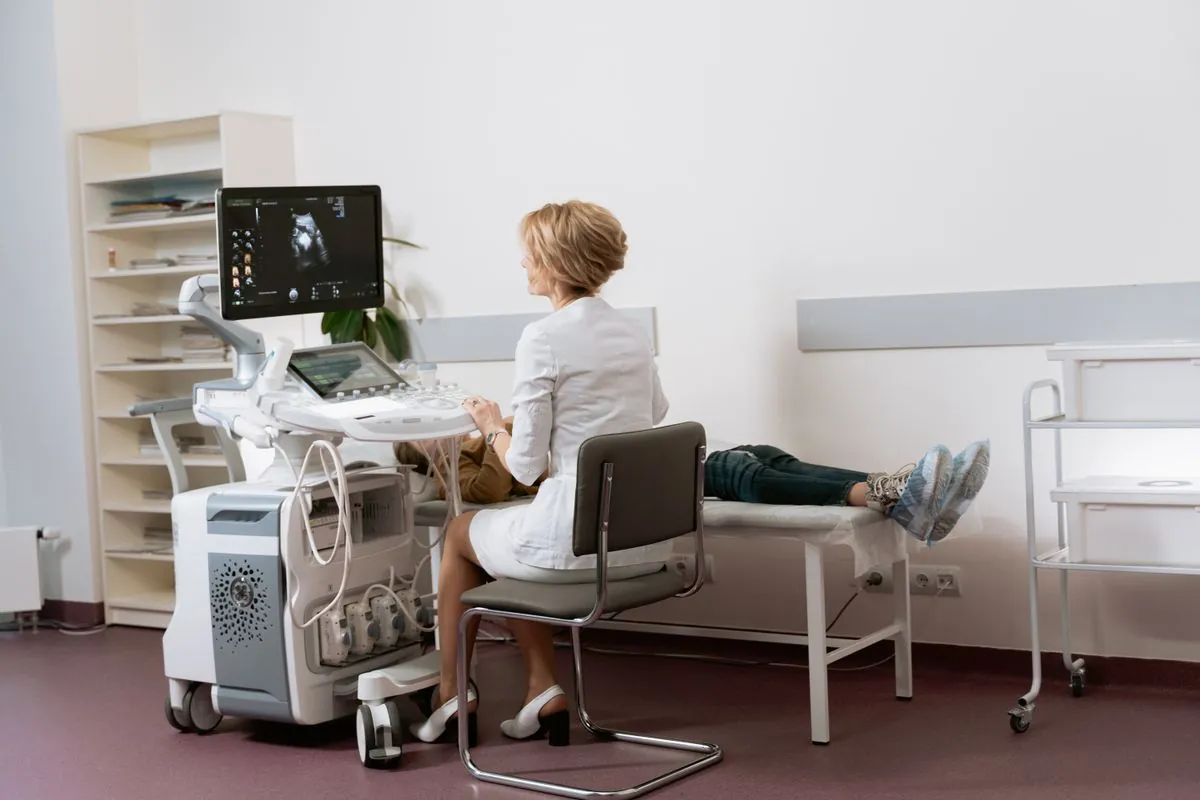
The mammogram is the test of choice for screening: it is the one that detects changes before they can be felt. A breast ultrasound does a different job. It is a complementary technique used to examine a specific lump, to tell whether a lesion is solid or a fluid-filled cyst, and to guide a biopsy when one is needed.
Dense breasts
In younger women and in those with a lot of glandular tissue, breasts are dense and mammograms are harder to read, because dense tissue and lesions both show up as pale on the image. In these cases ultrasound is particularly useful as a complement. If your mammogram report mentions high density, raise it with your gynaecologist.
If you find a lump: what happens at the appointment
The first step is an examination by the gynaecologist: what the lump is like, whether it moves, whether it hurts, whether there are skin changes or lymph nodes in the armpit. Depending on your age and what the examination shows, the next step is an ultrasound, a mammogram or both. If the image is clearly benign, like a simple cyst, follow-up can be as simple as checking it again after a while. If there is doubt, the next step is to take a sample with a fine needle, guided by ultrasound, for the laboratory to analyse.
That pathway is usually quick, and most of the time it ends with a benign result. Putting it off out of fear is the only thing that does not help.
What you can do to lower the risk
Some factors cannot be changed, like age or genetics, and others can. The ones in your hands are cutting down on alcohol, not smoking, keeping to a healthy weight, especially after the menopause, and weighing up the pros and cons of hormone treatment with your doctor if it is suggested. None of these replaces screening: they work alongside it.
Breast cancer in men
It is uncommon, but it happens: according to the WHO, between 0.5% and 1% of breast cancer cases occur in men. The signs are the same, mainly a hard lump under the nipple or changes to the skin and nipple, and they also need checking without delay.
How we look into it at Clínica Eupnea
Screening mammograms are done within the public programme, and we recommend taking part when the letter arrives. Outside that pathway, in Palamós we can help with what screening does not cover: a lump you have noticed, a change in the skin or nipple, a report you do not understand or an unclear result that needs following up.
Breast cancer early detection at Clínica Eupnea
The assessment is carried out by Dra. Graciela Gutierrez of our gynaecology service, which includes breast conditions among the problems it treats. If imaging is needed, the breast ultrasound is done by our radiology service, and when a lump needs studying, a needle biopsy can be guided by ultrasound. If you have never had a gynaecological check-up, or your last one was years ago, you may find it useful to read when to see a gynaecologist.
To book, call 872 21 75 91 or send us a WhatsApp message. Full details about the centre are in our guide to the medical centre in Palamós.
Frequently asked questions
The most common is a lump or thickening in the breast, often painless. Changes in the size or shape of the breast, dimpling or redness of the skin, changes to the nipple or areola and unusual or bloody nipple discharge should also be checked. A lump in the armpit that does not go away deserves an assessment too. In its early stages, however, breast cancer often causes no symptoms at all, which is why screening exists.
No. According to the WHO, most breast lumps are not cancer: many are cysts or other benign lesions. But a lump that does not hurt is not necessarily benign, so it still needs checking. With an examination and an ultrasound or mammogram, the cause is usually known quickly.
Within the screening programme, every two years. In Catalonia women aged 50 to 69 are invited by letter, and both the mammogram and any follow-up tests are free. If you have a strong family history or a mutation such as BRCA1, follow-up is different and is decided by the specialist.
Yes, it has been approved. On 20 May 2026 Spain's Public Health Commission agreed to extend it nationwide to women aged 45 to 74, with a mammogram every two years. Regions have up to three years to start applying it. For now the Catalan programme still covers ages 50 to 69, until the health department announces a timetable.
As a screening method it has not been shown to reduce mortality: the Cochrane review, covering 388,535 women, found no difference and nearly twice as many benign biopsies. What is recommended is knowing what your breasts are normally like and getting any change checked. It does not replace the programme's mammogram.
They do different jobs. The mammogram is the screening test and the one that finds changes before they can be felt. A breast ultrasound is complementary: it is useful in younger women or dense breasts, to tell a cyst from a solid lesion and to guide a biopsy. The two are often combined.
Yes, although it is uncommon: between 0.5% and 1% of cases, according to the WHO. The signs are the same, mainly a hard lump under the nipple or changes to the skin and nipple, and they should be checked without delay.
Have you noticed a change in your breast?
At Clínica Eupnea in Palamós the gynaecologist will see you and, if needed, we can do the breast ultrasound at the same centre.
Book an Appointment