

You get into bed exhausted, but your mind will not switch off. You glance at the clock: one, two, three in the morning... And the next day, everything feels twice as hard. If this happens to you often, you are not alone: insomnia is the most common sleep disorder of all. According to the American Academy of Sleep Medicine, chronic insomnia affects roughly 10% of adults, and up to a third experience transient symptoms at some point during the year.
The good news is that insomnia can be treated — and in most cases without having to rely on pills long term. In this article we explain why you can't sleep, what you can do at home and when it is time to see a specialist. At Clínica Eupnea, in Palamós, the pulmonology sleep unit and the psychology team work side by side to help you sleep well again.
In this article
Key takeaways
- Insomnia is chronic when it occurs 3 or more nights a week for longer than 3 months
- Stress, poor habits and screens are the most frequent causes
- Persistently poor sleep raises cardiovascular and metabolic risk
- Sleep hygiene is the first step, but in chronic insomnia it is often not enough on its own
- Cognitive behavioural therapy (CBT-I) is the first-line treatment, ahead of medication
- Loud snoring with pauses in breathing means sleep apnoea must be ruled out with a sleep study
What is insomnia and what types are there?
Insomnia is the persistent difficulty in falling asleep or staying asleep — or waking far too early and being unable to drop off again — despite having the opportunity and the right conditions to sleep, and which causes distress or impaired functioning during the day. It is not defined by hours alone: some people manage perfectly well on 6 hours, while others need 9.
Depending on the point in the night at which it appears, we talk about sleep-onset insomnia (trouble falling asleep), sleep-maintenance insomnia (frequent awakenings in the middle of the night) or early-morning awakening (opening your eyes long before the alarm goes off). And depending on how long it lasts:
- Acute or transient insomnia: lasts days or a few weeks and is usually linked to a specific situation (work stress, a worry, bereavement, travel). It tends to resolve once the trigger does.
- Chronic insomnia: occurs at least 3 nights a week for 3 months or more. By this stage, the problem has usually become 'disconnected' from its original cause and is kept going by learned habits and conditioning. This is the form that requires specialist treatment.
Symptoms and consequences of sleeping badly
Insomnia does not end when the sun comes up. Its daytime consequences are, in fact, part of the diagnosis:
- Fatigue and daytime sleepiness: a feeling of not having rested, constant yawning, the need for long naps
- Problems with concentration and memory: mistakes at work, forgetfulness, a sense of 'brain fog'
- Irritability and mood changes: more impatience, anxiety or low mood
- Headache and muscle tension on waking
- A higher risk of road and workplace accidents because reflexes are slowed
Over the long term, chronic sleep deprivation takes a direct toll on health. As the National Heart, Lung, and Blood Institute (NHLBI) notes, sustained insomnia is associated with a higher risk of high blood pressure, cardiovascular disease, type 2 diabetes, excess weight, a weakened immune system, and anxiety and depressive disorders. Sleeping well is not a luxury: it is a pillar of health, just like diet or exercise.
Causes of insomnia: why you can't sleep
Insomnia almost never has a single cause. These are the factors we come across most often in clinic:
- Stress, anxiety and worry: the most common cause. The brain stays on high alert and refuses to 'switch off' when it should
- Poor sleep habits: irregular hours, long naps, heavy dinners or going to bed before you are sleepy
- Screens before bed: the blue light from phones and tablets delays the release of melatonin, the hormone that induces sleep
- Caffeine, alcohol and tobacco: coffee and energy drinks taken in the afternoon; alcohol, which helps you nod off but fragments your sleep; and nicotine, which is a stimulant
- Sleep-related breathing disorders: sleep apnoea and snoring fragment sleep and cause awakenings that patients often do not remember
- Hormonal changes: pregnancy and, above all, the menopause, with night-time hot flushes that interrupt sleep
- Illness and chronic pain: gastro-oesophageal reflux, asthma, hyperthyroidism, joint pain, restless legs syndrome
- Medication: some antidepressants, corticosteroids, bronchodilators or diuretics taken in the evening
- Age: sleep becomes lighter and more fragmented over the years, and insomnia becomes more prevalent
- Shift work and jet lag: both knock the internal body clock out of sync
Sleep hygiene: 10 tips that really work
Sleep hygiene is the set of habits that favour restorative sleep. It is the foundation of any insomnia treatment and, in mild cases, may be enough on its own:
- Keep regular hours: go to bed and get up at the same time every day, weekends included
- Get natural light in the morning: it helps to synchronise your body clock
- Exercise regularly, but avoid intense activity in the 3 hours before bedtime
- Avoid caffeine from mid-afternoon onwards: coffee, tea, cola and energy drinks
- Have a light, early dinner: leave at least 2 hours before going to bed
- Limit alcohol and tobacco, especially in the evening
- Switch off screens 1-2 hours before sleep: phone, tablet and computer all delay sleep
- Look after your sleep environment: a cool (18-20 °C), dark and quiet bedroom, with a comfortable mattress and pillow
- Keep the bed for sleeping: do not work in it, watch series in it or scroll through your phone in it
- If you are not asleep within 20 minutes, get out of bed: do something relaxing in dim light and come back when you feel sleepy
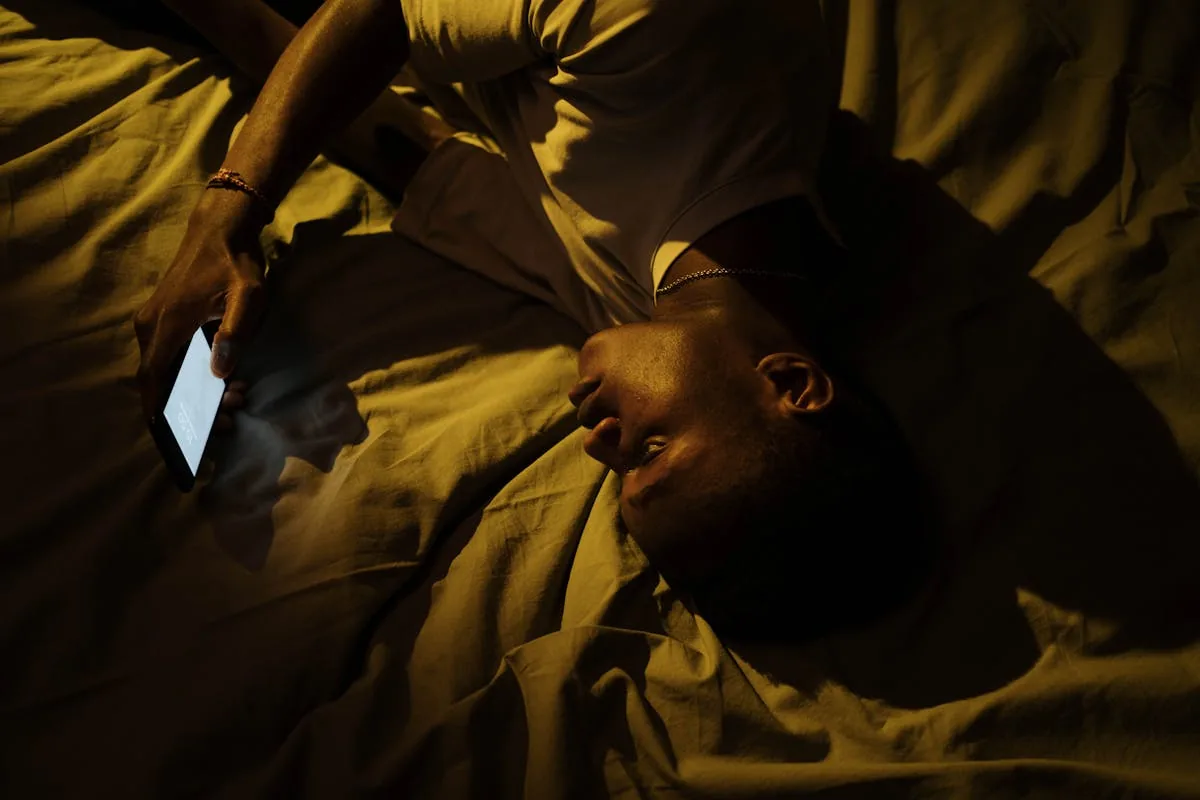
The phone in bed is the number one enemy of sleep hygiene: on top of the blue light comes the mental stimulation of news, social media and messages, which keep the brain wired at precisely the moment it should be winding down.
Treatment for insomnia
When sleep hygiene is not enough, insomnia — especially chronic insomnia — calls for a professional approach. International clinical guidelines agree on the order of priorities:
Cognitive behavioural therapy for insomnia (CBT-I)
Cognitive behavioural therapy for insomnia is the first-line treatment, ahead of medication. It tackles the thoughts and behaviours that keep the problem going: the fear of not sleeping, spending too long in bed, the negative bed-wakefulness conditioning. It includes stimulus control, sleep restriction, relaxation techniques and cognitive restructuring. Its effectiveness is firmly established and, unlike sleeping pills, the benefits last over the long term. The psychology team at Clínica Eupnea applies these techniques in a personalised way, and also addresses anxiety or low mood when they are part of the problem.
Medication: occasional use, always supervised
Hypnotics and benzodiazepines can help at specific moments (acute insomnia brought on by a period of intense stress), but they must be used at the lowest effective dose, for the shortest possible time and always on medical prescription: they cause tolerance and dependence. Melatonin can be useful in circadian rhythm disorders. You can find more general information about the condition at MedlinePlus, the health portal of the US National Library of Medicine. Never self-medicate to get to sleep.
Treating the underlying cause
If another condition lies behind the insomnia, treating it is the priority: reflux, pain, an overactive thyroid... And above all, sleep apnoea: if your sleep is being fragmented by pauses in breathing, no pill will improve it. In these cases, treatment for snoring and sleep apnoea — which may include CPAP — transforms the quality of your rest and protects your cardiovascular health.
Insomnia or sleep apnoea?
Loud snoring every night, pauses in breathing noticed by your partner, waking up gasping for air, morning headaches and severe daytime sleepiness are all signs that the problem may be respiratory rather than 'simple' insomnia. In these cases a sleep study (polygraphy) is needed to confirm the diagnosis and treat the real cause.
When to see a sleep specialist
Book an appointment if your insomnia persists for more than 3-4 weeks despite better habits, if it clearly affects your performance or your mood, if you regularly need pills to get to sleep, or if you snore with pauses in your breathing. At Clínica Eupnea, in Palamós (Baix Empordà), the pulmonology sleep unit and the psychology team assess your case in a coordinated way: a sleep study when needed, cognitive behavioural therapy, a review of your medication and follow-up until you sleep well again.
Frequently asked questions about insomnia
Most adults need between 7 and 9 hours of sleep each night, although there is a degree of individual variability. Beyond quantity, what really counts is quality: waking up refreshed and keeping a good level of energy throughout the day are the best indicators. Children and teenagers need more hours, and from the age of 65 the need usually settles at around 7 to 8 hours, often with more fragmented sleep.
If after about 20 minutes you still have not dropped off again, get out of bed and do something quiet in dim light (reading, listening to soft music), avoiding screens and avoiding checking the clock. Go back to bed only when you feel sleepy. Lying in bed tossing and turning increases frustration and teaches the brain to associate the bed with being awake, which is exactly what perpetuates insomnia.
Melatonin can be helpful for circadian rhythm problems (jet lag, shift work or delayed sleep phase syndrome), but its effectiveness in chronic insomnia is modest. It is no substitute for cognitive behavioural therapy or for correcting your sleep habits. Even though it is sold over the counter, it is wise to check with your doctor before taking it, especially if you are on other medication.
It is not advisable. Hypnotics and benzodiazepines are indicated for short periods (ideally under 4 weeks) and always on medical prescription, because they cause tolerance and dependence and increase the risk of falls and cognitive impairment, above all in older people. They should never be combined with alcohol or stopped abruptly: withdrawal has to be gradual and supervised by your doctor.
Suspect sleep apnoea if you snore loudly, if your partner notices pauses in your breathing while you sleep, if you wake up gasping for air or with a headache, or if you feel very sleepy during the day despite spending enough hours in bed. In these cases a sleep study is needed to confirm the diagnosis. At Clínica Eupnea, the pulmonology sleep unit carries out this study and, where necessary, prescribes the right treatment, such as CPAP.
Can't sleep well?
The sleep unit at Clínica Eupnea in Palamós helps you find the cause of your insomnia and the treatment that works.
Book Appointment