
A heart that races for no reason, a knot in your stomach, shoulders that are always tense and a mind that will not stop spinning at night. The ‘nerves’ —what medicine calls anxiety and stress— have become one of the most frequent reasons for seeking medical advice. According to the World Health Organization, anxiety disorders are the most common mental health problems and affect hundreds of millions of people around the world.
Faced with this, more and more people are looking for tools to complement medication, and one of the most sought-after is acupuncture. But can an age-old technique really calm the nerves? In this article we explain the relationship between acupuncture and the nervous system, which symptoms it can help with, what the science says and what a session is like. At Clínica Eupnea, in Palamós, we offer medical acupuncture integrated with the rest of our specialties.
In this article
- Acupuncture and the nervous system: what is the connection?
- How acupuncture acts on the nerves
- Symptoms of anxiety and stress it can relieve
- What does the science say about acupuncture and anxiety?
- What an acupuncture session to calm the nerves is like
- A complement, not a substitute
- Frequently asked questions about acupuncture and anxiety
Key takeaways
- Acupuncture stimulates the parasympathetic nervous system, the one that activates the body's relaxation response
- It helps to reduce cortisol (the stress hormone) and to release endorphins and serotonin
- It is especially useful for the physical symptoms of nerves: muscle tension, insomnia, palpitations and tension headache
- The evidence is promising but still limited: it should be considered a complement, never a substitute for psychological or medical treatment
- A session is practically painless; you normally need a cycle of several sessions
- At Clínica Eupnea we integrate acupuncture with psychology and healthy lifestyle habits
Acupuncture and the nervous system: what is the connection?
Acupuncture is a technique that originated in traditional Chinese medicine, with more than two thousand years of history, and consists of inserting very fine needles into specific points on the body. Traditionally it was said to rebalance the energy, or ‘qi’. Today, however, we interpret medical acupuncture through the lens of modern neurophysiology, and it is precisely here that the connection with the nerves appears.
When a needle is inserted, the nerve endings in the skin and muscle are stimulated. This stimulus travels along the spinal cord to the brain and triggers a series of responses that modulate the autonomic nervous system, the one that controls involuntary functions such as the heartbeat, breathing and digestion. This system has two branches that work like a see-saw: the sympathetic nervous system, which activates the ‘fight or flight’ response and fires up when we are nervous or stressed, and the parasympathetic nervous system, responsible for calm, rest and recovery. In chronic anxiety and stress, the sympathetic branch is permanently dominant and the body stays ‘switched on’. The underlying aim of acupuncture applied to the nerves is, precisely, to help tip that see-saw towards the side of calm.
How acupuncture acts on the nerves
Although there is still a great deal to investigate, research in recent years points to several mechanisms by which acupuncture may help to calm the nervous system:
It activates the parasympathetic nervous system
Several studies have observed that stimulating certain points —often linked to the vagus nerve— favours the parasympathetic response: the heart rate drops, blood pressure eases, breathing slows down and the muscles relax. It is the exact opposite of what happens during an anxiety attack. This is why so many people describe the session as a feeling of physical ‘switching off’ that they had not experienced for a long time.
It regulates cortisol and releases endorphins
Acupuncture also appears to modulate the hormonal axis of stress, helping to lower levels of cortisol. At the same time, it stimulates the release of endorphins, serotonin and other neurotransmitters involved in well-being and the sensation of calm. As the US National Center for Complementary and Integrative Health (NCCIH) explains, these effects on the nervous system are one of the most studied pathways for explaining how acupuncture works.
Symptoms of anxiety and stress it can relieve
Anxiety and stress are not only a mental sensation: they show up in the body. Acupuncture is often used as a support to relieve precisely these physical symptoms of the nerves:
- Muscle tension in the neck, shoulders and jaw (the classic feeling of ‘carrying the weight on your shoulders’)
- Insomnia and poor-quality sleep linked to worry
- Palpitations and a sense of tightness in the chest
- Tension headache and migraines triggered by stress
- Functional digestive complaints: the ‘knot in the stomach’, a bloated feeling or irritable bowel
- Irritability, fatigue, a feeling of constant tiredness and difficulty concentrating
When the nerves have a significant emotional component, acupuncture can be one more piece within a plan that includes psychological support. If this is your case, you may be interested in our article on how to manage anxiety and stress with the help of a psychologist.
What does the science say about acupuncture and anxiety?
We have to be honest: the evidence is promising but still limited. Several reviews and clinical trials suggest that acupuncture can reduce the symptoms of anxiety and stress, especially when it is used as a complement to conventional treatment. However, many studies have methodological limitations —it is hard to design a good ‘placebo’ group when we are talking about needles—, so the results have to be interpreted with caution.
Reference institutions such as the NCCIH consider that acupuncture may be useful for certain indications and that, in general, it is safe when it is carried out by trained professionals. You can read more general information about the technique at MedlinePlus, the health portal of the US National Library of Medicine. The reasonable conclusion is that acupuncture is not a magic solution and does not cure anxiety on its own, but it can be a valuable complementary tool for better managing the nerves. If you would like to know about its applications beyond stress, we explain all the benefits and applications of medical acupuncture in another article.
Does acupuncture replace the psychologist or medication?
No. When facing an anxiety disorder, the first-line treatments are psychological therapy and, when indicated, medication prescribed by your doctor. Acupuncture is a complement that can accompany these treatments and help with the physical symptoms, but you should never stop a prescribed medication without first consulting the professional who prescribed it.
What an acupuncture session to calm the nerves is like
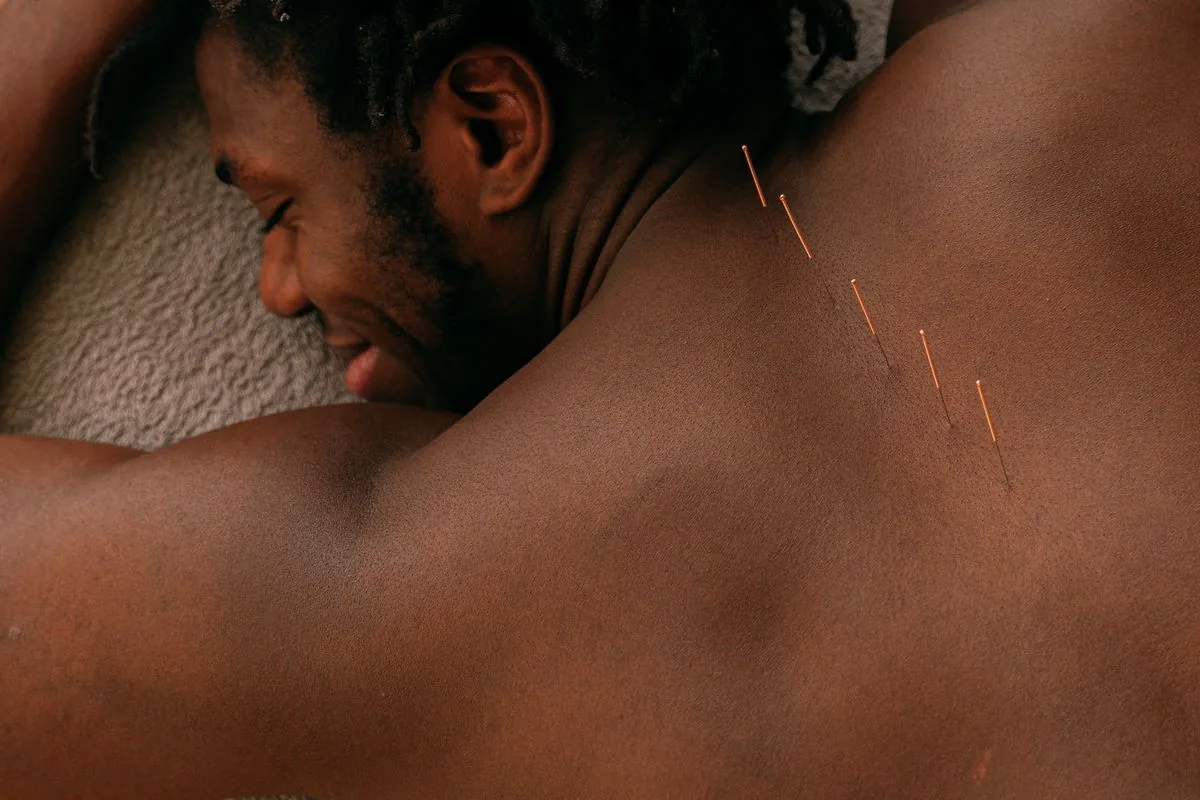
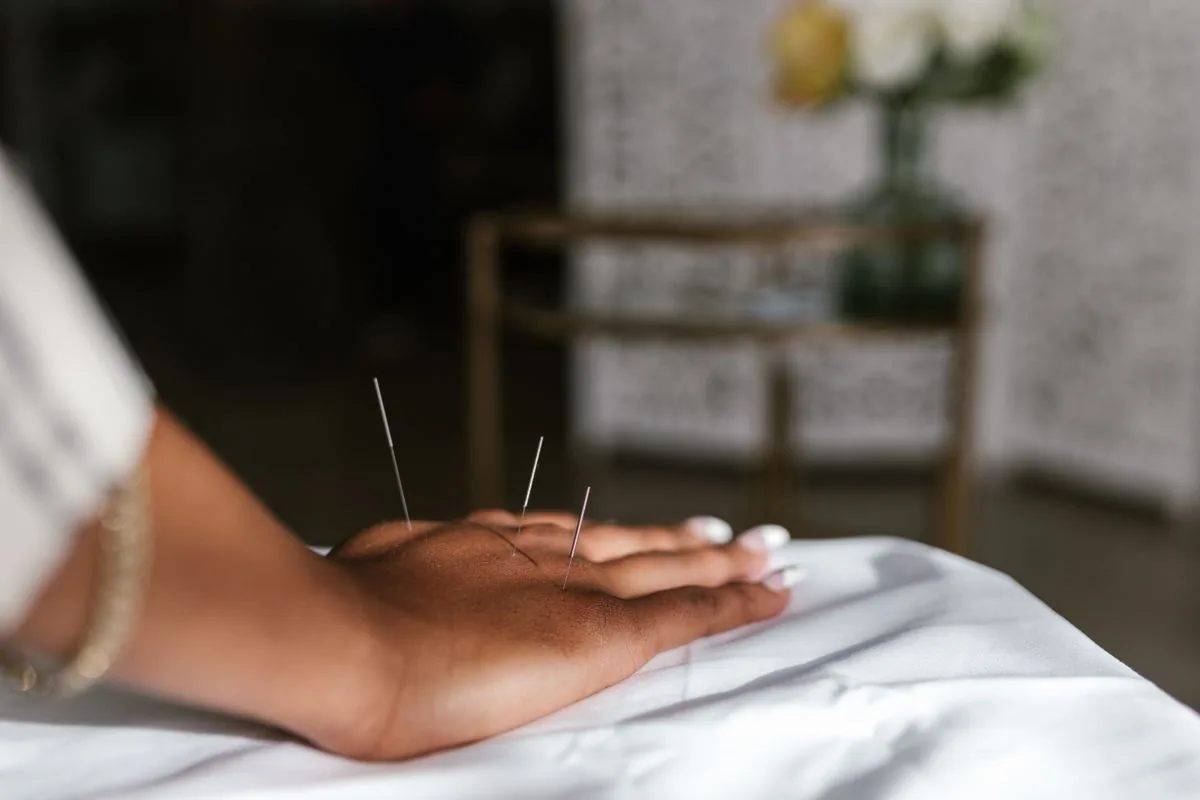
The first visit always begins with an assessment of your situation: how long you have had the nerves, how you experience them in your body, and what habits and medical history you have. From there, the practitioner selects the most suitable points. Next, you lie down comfortably and the needles —sterile and single-use— are put in place, where they stay for between 20 and 30 minutes while you rest in a calm setting. Most people feel a deep relaxation during this time, and it is not unusual to fall asleep.
Auriculotherapy: ear acupuncture
For anxiety and stress, a very common technique is auriculotherapy, or ear acupuncture. The outer ear concentrates points connected with the nervous system, and very small needles or adhesive seeds can be placed there to maintain a gentle stimulus for a few days. It is often combined with body acupuncture to enhance its relaxing effect.
How many sessions are needed?
There is no fixed number. Some people feel better from the very first session, but to consolidate the results you usually need a cycle of several sessions —typically between 6 and 10—, with a weekly frequency at the start that is then spaced out. The effects of acupuncture are cumulative: the body ‘learns’ to return to a state of calm more easily.
A complement, not a substitute
The key to getting the most out of acupuncture is to understand it for what it is: a complementary tool within a comprehensive approach to the nerves. At Clínica Eupnea, in Palamós (Baix Empordà), medical acupuncture is carried out by qualified professionals and is integrated with the rest of the team: psychology, sleep habits, physical exercise and breathing techniques. It is this combination that tends to give the best results over the long term, because it addresses both the emotional cause and the physical manifestation of anxiety and stress at the same time. Looking after your rest, moving every day and learning to breathe consciously multiply the effect of any therapy.
Frequently asked questions about acupuncture and anxiety
No, or very little. Acupuncture needles are extremely fine —many times thinner than injection needles—, so most people only feel a slight prick or, often, nothing at all. Once they are in place, it is common to feel a sensation of heaviness, warmth or mild tingling (what is known as the ‘de qi’ sensation). The vast majority of patients experience the session as something deeply relaxing, and some even fall asleep.
It depends on each person and on how long you have been carrying the anxiety or stress. Some people feel more relaxed after the very first session, but to obtain a lasting effect you normally need a cycle of several sessions —often between 6 and 10—, with a weekly frequency at the start that is then spaced out. The effects of acupuncture are cumulative: they build up session after session.
Acupuncture is very safe when it is carried out by a trained professional using sterile, single-use needles, as we do at Clínica Eupnea. Side effects are rare and mild: a small bruise, a drop of blood when the needle is removed or a passing drowsiness. It is important to tell the acupuncturist if you are pregnant, if you are taking anticoagulants or if you have a pacemaker, because in these cases the technique needs to be adapted.
No. Acupuncture is a complement, not a substitute. The first-line treatments for anxiety are psychological therapy and, when indicated, medication. You should never stop a prescribed medicine without consulting your doctor. Acupuncture can accompany these treatments and help you better manage the physical symptoms of nerves, but always within a comprehensive approach.
Yes. By favouring the activation of the parasympathetic nervous system and reducing physical tension, acupuncture can make it easier to fall asleep, especially when the insomnia is linked to anxiety and stress. It is not a miracle solution: it works best combined with good sleep hygiene and, if necessary, with the support of the sleep unit. If the problem persists, it is advisable to have a specialist assess the cause.
Are your nerves getting the better of you?
The team at Clínica Eupnea in Palamós helps you calm anxiety and stress with medical acupuncture integrated with the rest of our specialties.
Book Appointment