
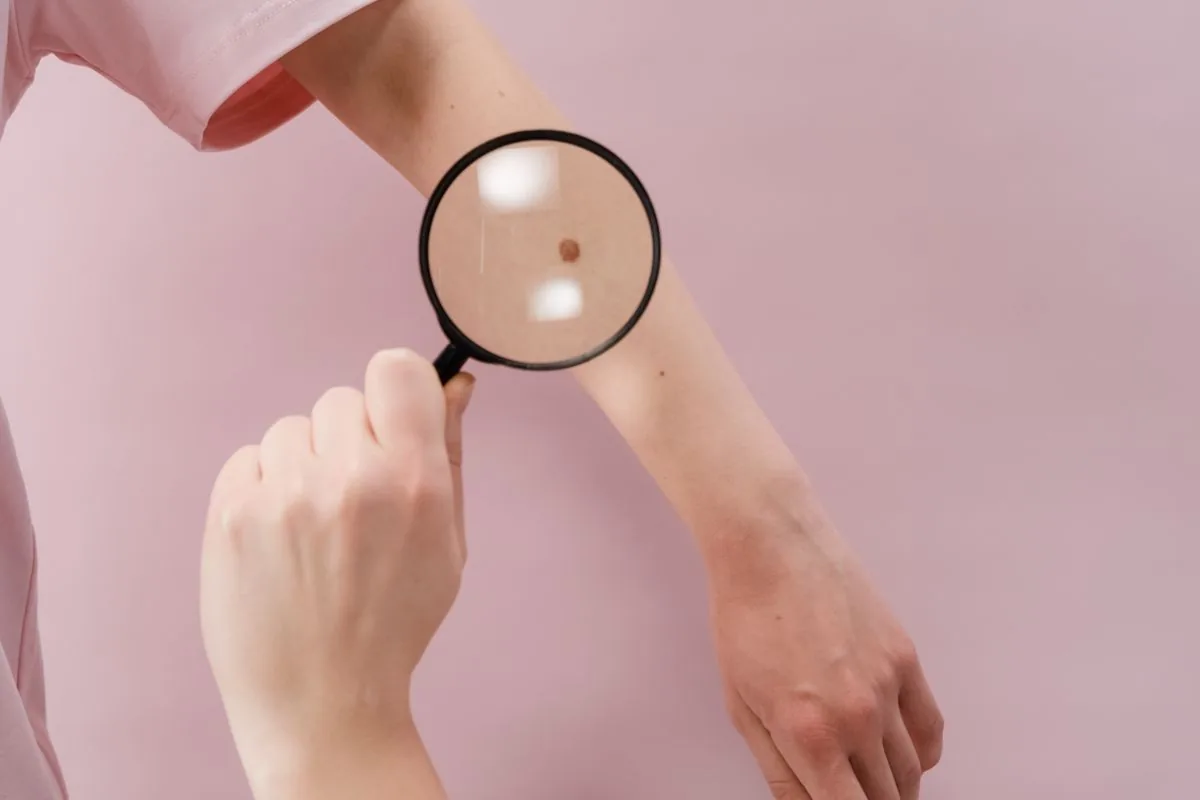
That mole you have always had on your back and that now looks slightly different. A new spot that has appeared this summer. A mole that occasionally itches or bleeds. Our skin sends us signals and, often, all we need to do is learn to read them. Skin cancer is the most common type of cancer in the world and, at the same time, one of the most preventable and curable: when it is detected early, the vast majority of cases have an excellent prognosis.
The key is, literally, in your hands: a regular mole check, both at home with a self-examination and at the dermatologist's clinic. In this article we explain why it is so important, how to observe your moles with the ABCDE rule, what the warning signs are that you should not ignore and what a professional check is like. At Clínica Eupnea, in Palamós (Baix Empordà), we offer dermatology to support you in prevention and the early detection of skin cancer.
In this article
- Why is it important to check your moles?
- The ABCDE rule for self-examining moles
- Other warning signs you should not ignore
- Risk factors for skin cancer
- What a mole check with the dermatologist is like
- Prevention: protect yourself from the sun all year round
- Frequently asked questions about mole checks
Key takeaways
- Skin cancer is the most common cancer, but also one of the most curable if it is detected early
- The ABCDE rule (Asymmetry, Border, Colour, Diameter and Evolving) helps you to identify suspicious moles
- The main risk factor is sun exposure and sunburn, especially in childhood
- It is advisable to do a skin self-examination once a month and to have a check with the dermatologist according to your risk
- Dermoscopy makes it possible to see the mole in detail and to decide whether a biopsy is needed
- The best weapon is prevention: sun protection all year round and keeping an eye on changes
Why is it important to check your moles?
The skin is the largest organ in the body and the one most exposed to external aggressions, especially the ultraviolet (UV) radiation from the sun. Over the years, this exposure builds up and can damage the skin cells to the point of making them grow in an uncontrolled way: this is the origin of skin cancer. According to the World Health Organization, UV radiation is the main environmental factor involved in most skin cancers.
The good news is that the skin is a visible organ: unlike other cancers that grow in silence, most skin tumours can be seen and touched. This makes the mole check one of the most powerful and simplest prevention tools that exist. The most serious type, melanoma, can be aggressive if it advances, but when it is detected at an early stage the prognosis tends to be very good. In a sun-and-beach area like the Costa Brava, where we spend many hours outdoors, keeping an eye on your skin should be just another health habit, like having a blood test or checking your blood pressure.
The ABCDE rule for self-examining moles
The ABCDE rule is a simple, international method for remembering which characteristics of a mole should put you on alert. In front of the mirror, with good light and, if necessary, with someone's help to look at your back, pay attention to these five points:
- A — Asymmetry: if you were to divide the mole in half, the two parts would not match.
- B — Border: the edges are irregular, jagged or poorly defined, instead of smooth and clean.
- C — Colour: it shows several colours or uneven shades (brown, black, red, white or bluish) within the same mole.
- D — Diameter: it is larger than 6 mm (roughly the size of a pencil eraser), although melanomas can also be smaller.
- E — Evolving: the most important one. The mole changes in size, shape, colour or texture over time, or starts to itch, bleed or form a crust.
This system, which prevention campaigns such as Euromelanoma promote across Europe, is not used to make a diagnosis, but to know when it is worth seeking advice. If a mole meets one or more of these criteria, book an appointment with the dermatologist.
Other warning signs you should not ignore
Beyond the ABCDE rule, there are other clues that the body gives us and that it is worth bearing in mind during self-examination:
- The ‘ugly duckling sign’: a mole that stands out because it is clearly different from the rest of yours.
- A wound or sore that does not quite heal over several weeks.
- A rough, scaly patch or a shiny lump, often in areas heavily exposed to the sun (face, ears, scalp, the backs of the hands).
- A mole that itches, bleeds, hurts or oozes without a clear cause.
- The appearance of new spots or moles after the age of 40, an age at which it is less common for new moles to appear.
None of these signs means, on its own, that you have skin cancer —most moles are completely benign—, but they do deserve a professional assessment to put your mind at rest.
Risk factors for skin cancer
Everyone should keep an eye on their skin, but some people have a higher risk and, therefore, must be especially consistent with their mole checks. The main risk factors are:
- Fair skin, hair and eyes (low phototypes), which burn easily and tan little.
- A history of sunburn, especially that suffered during childhood and adolescence.
- Intense or accumulated sun exposure, whether through work, sport or outdoor leisure.
- Use of tanning beds (artificial UVA), which are not advisable because of their risk.
- Having many moles or atypical moles.
- A personal or family history of melanoma or other skin cancers.
- Having a weakened immune system (for example, due to immunosuppression).
If you identify with several of these points, it is worth discussing it with your dermatologist so that they can set up a follow-up plan tailored to you.
What a mole check with the dermatologist is like
A professional check is simple, painless and quick. It begins with a few questions about your medical history and sun-exposure habits, and continues with a complete head-to-toe skin examination, including areas we often overlook such as the scalp, the soles of the feet or between the toes. At Clínica Eupnea we have a specialist who carries out this assessment; you can find out everything we offer on the page for dermatology in Palamós.
Dermoscopy: looking inside the mole
The key tool of the check is the dermatoscope, a kind of magnifying glass with polarised light that makes it possible to see structures and colours of the mole that are invisible to the naked eye. This technique, dermoscopy, greatly increases the accuracy of the diagnosis and helps to tell benign moles apart from suspicious ones. When a lesion raises doubts, the dermatologist may decide to remove it and send it for analysis by means of a biopsy, which is the only way to confirm its nature with certainty.
How often should you have a check?
There is no single figure for everyone. As a habit, it is very helpful to do a self-examination once a month to get to know your own moles and detect changes. As for the visit with the specialist, the frequency depends on your risk: for most people a check every one or two years is enough, but in high-risk profiles (many moles, a history of melanoma, very fair skin) the dermatologist may recommend more frequent checks.
When should you seek advice without waiting?
Book an appointment with the dermatologist as soon as possible if a mole rapidly changes in size, shape or colour; if it bleeds, itches or hurts persistently; if a new lesion appears that stands out from the rest; or if you have a wound on the skin that does not heal over several weeks. When in doubt, it is always better to seek advice: early detection is the factor that most influences the prognosis of skin cancer.
Prevention: protect yourself from the sun all year round
The mole check detects problems in time, but the best strategy is to prevent them from appearing. Prevention is based on smart sun protection all year round, not only in summer: use a broad-spectrum, high-factor sunscreen every day, reapply it every two hours when you are outdoors, seek shade during the central hours of the day (between 12 noon and 4 pm), wear a hat, a T-shirt and sunglasses, and protect children in particular. You can read more about this habit in our article on the importance of sunscreen.
In addition, avoid tanning beds and moisturise and look after your skin regularly; you will find more tips in our guide on skin care. If you want to expand the medical information on melanoma and the rest of skin tumours, the MedlinePlus portal of the US National Library of Medicine is a reliable source. Remember: protecting yourself from the sun today is investing in the health of your skin tomorrow.
Frequently asked questions about mole checks
The best guide for self-examination is the ABCDE rule: be wary of a mole that is Asymmetrical, with irregular Borders, uneven Colour, a Diameter larger than 6 mm or that is Evolving (changing in size, shape or colour). The ‘ugly duckling sign’ is also suspicious: a mole that stands out because it is different from all the others. None of these signs on its own means that you have skin cancer, but they are a reason to consult the dermatologist, who is the one who can make a reliable diagnosis.
As a general rule, it is advisable to do a skin self-examination once a month to become familiar with your moles and detect any change. As for the check with the dermatologist, the frequency depends on your risk: for most people, a visit every one or two years is reasonable, but if you have many moles, a family history of melanoma, very fair skin or have already had a lesion removed, the specialist may recommend more frequent checks.
No. Although melanoma is often linked to moles, it can also appear on healthy skin, without any prior mole. In addition, the most common types of skin cancer —basal cell and squamous cell carcinoma— usually show up as a wound that does not heal, a rough patch, a shiny lump or a persistent crust, often in areas heavily exposed to the sun such as the face, the ears or the scalp. That is why it is advisable to keep an eye on all your skin, not only your moles.
Removing a mole is a minor and very common procedure that is done under local anaesthetic, so you will not feel pain during the intervention. Whenever possible, the lesion is sent for analysis (a biopsy) to confirm its nature. A small scar may remain, but the dermatologist works to minimise it. You should never try to remove or burn off a mole at home: apart from the risk of infection, you lose the chance to have it analysed properly.
Yes. Although the risk is lower than in people with fair skin, skin cancer can affect any phototype. In fact, in people with dark skin it is often diagnosed later and in less usual areas, such as the palms, the soles of the feet or under the nails, which can worsen the prognosis. That is why sun protection and skin surveillance are important for everyone, regardless of skin colour.
Is there a mole that worries you?
The dermatology team at Clínica Eupnea in Palamós helps you with mole checks and the early detection of skin cancer. Do not wait to put your mind at rest.
Book Appointment