
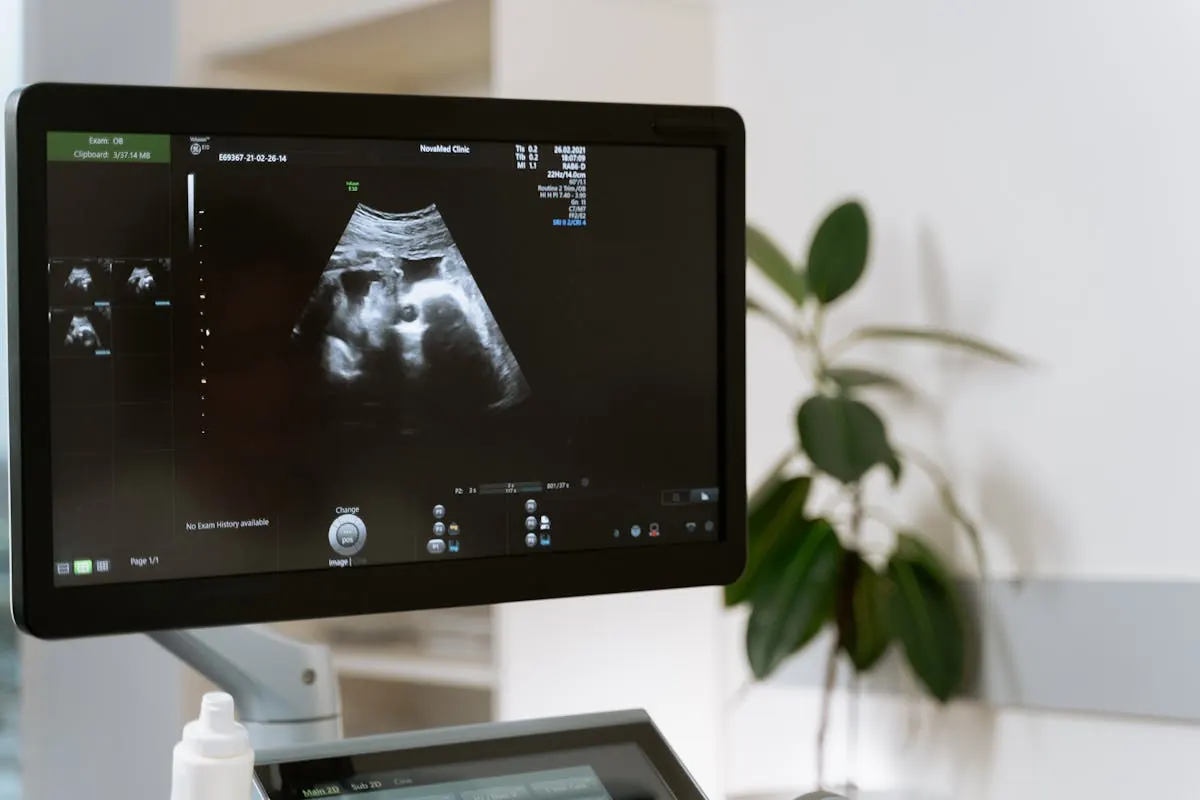
Ultrasound is an imaging test that uses high-frequency sound waves to create real-time images of internal organs. It's safe, painless, radiation-free, and extremely useful for diagnosing many conditions.
In this article
Key takeaways
- Ultrasound is safe, painless and radiation-free
- It shows organs and structures in real time
- Types include abdominal, pelvic, thyroid and Doppler
- Preparation depends on the type of study
- It's essential in pregnancy monitoring
Types of ultrasound
- Abdominal: liver, gallbladder, kidneys, pancreas, spleen
- Pelvic/gynaecological: uterus, ovaries, pregnancy
- Thyroid and soft tissues: nodules and cervical lymph nodes
- Vascular Doppler: arteries and veins
- Musculoskeletal: tendons, joints
How to prepare
Preparation depends on the study: upper abdominal requires 6-8 hours fasting; pelvic needs a full bladder; thyroid or soft tissues need no preparation. The clinic gives precise instructions when booking.
How the test is performed
During the ultrasound, the radiologist applies gel to the skin and moves a probe to capture real-time images. It takes 15-30 minutes. It's painless and needs no recovery.
Common indications
- Abdominal or pelvic pain
- Pregnancy monitoring
- Evaluation of thyroid nodules
- Study of varices or circulation
- Screening in patients with risk factors
Advantages of ultrasound
- No ionising radiation
- Immediate results
- Safe during pregnancy
- Affordable and widely available
- Can guide diagnostic punctures
Do you need an ultrasound in Palamós?
Clínica Eupnea Palamós offers abdominal, gynaecological, thyroid and Doppler ultrasound with same-visit reports.
Book Appointment