

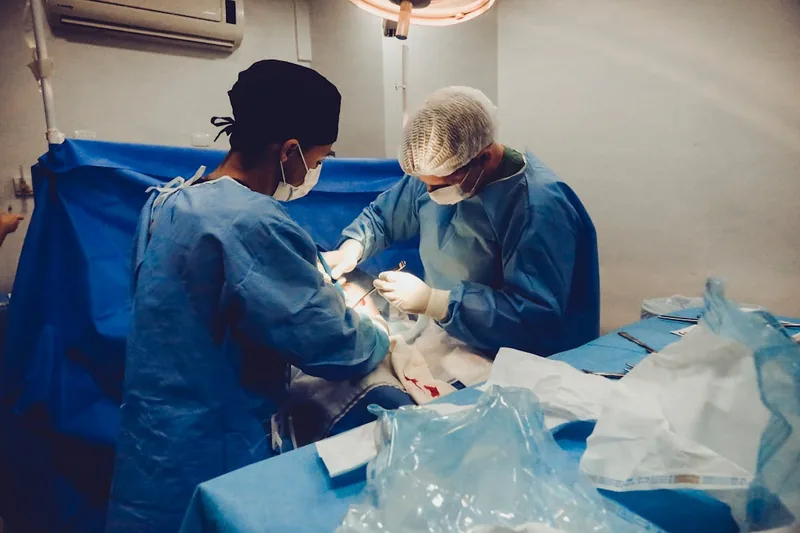
Outpatient minor surgery encompasses all surgical procedures that can be performed in the consulting room under local anaesthesia and without the need for hospitalisation. The patient arrives, the procedure is carried out and they go home the same day — usually within less than an hour. Simple, safe and effective.
At Clínica Eupnea in Palamós, the general surgery team performs a wide range of minor surgical procedures with the highest safety standards, in a comfortable and well-equipped clinical setting.
In this article
Key takeaways
- Performed under local anaesthesia with no need for hospitalisation
- Procedures last 15 to 45 minutes with rapid recovery
- Includes removal of cysts, lipomas, ingrown toenails and skin lesions
- Very safe with a minimal complication rate
- Enables diagnosis confirmation through histopathological analysis
- Patients return to their routine within 24–48 hours
What is outpatient minor surgery?
Minor surgery refers to a set of straightforward surgical procedures with the following characteristics:
- Local anaesthesia: only the area to be treated is numbed; the patient remains awake and comfortable
- Short duration: between 15 and 45 minutes in most cases
- No hospitalisation: the patient goes home immediately afterwards
- Low risk: procedures with a very low complication rate
- Rapid recovery: most patients resume normal activities within 1–2 days
Most common procedures
Skin lesions
- Epidermal (sebaceous) cysts: rounded lumps beneath the skin, usually painless, which can become infected. Complete excision includes the capsule to prevent recurrence
- Lipomas: benign fatty tumours, soft and mobile. Removed when they grow, cause discomfort or for cosmetic reasons
- Fibromas (skin tags): small skin protrusions common on the neck, armpits and groin
- Warts: viral lesions removable by cryotherapy, electrocautery or excision
- Naevi (moles): excision for histopathological analysis when suspicious changes are present
Other procedures
- Ingrown toenail (onychocryptosis): partial or total nail removal with matricectomy to prevent recurrence
- Abscess drainage: incision and drainage of pus collections
- Biopsies: tissue samples for histological diagnosis
- Subcutaneous foreign body: removal of objects embedded under the skin
- Wound suturing: closure of wounds requiring stitches
Advantages of minor surgery
- Convenience: performed in the clinic, avoiding long hospital waiting times
- Speed: very short waiting lists — an appointment within days or a few weeks
- Safety: because general anaesthesia is not needed, risks are drastically reduced
- Cost: lower than a hospital procedure
- Recovery: almost immediate return to normal life
- Diagnosis: excised samples are sent for histopathological confirmation
When should samples be sent for histopathology?
Whenever a lesion is excised, sending it for histopathological analysis is recommended. This confirms the lesion is benign, rules out atypical cells and ensures the resection margins are adequate. It is a fundamental step for the patient's peace of mind.
Preparation and aftercare
Before the procedure
- Inform the doctor of any medications you take, especially anticoagulants or antiplatelet agents
- Fasting is not required for procedures under local anaesthesia (unless otherwise indicated)
- Wear comfortable clothing that allows easy access to the area to be treated
After the procedure
- Wound care: keep the dressing dry and clean for the first 24–48 hours
- Medication: painkillers as needed (usually paracetamol or ibuprofen)
- Activity: avoid intense effort affecting the area for 1–2 weeks
- Stitch removal: typically between 7 and 14 days, depending on the location
- Sun protection: protect the scar from the sun for at least 6 months
When is minor surgery needed?
You should consult a surgeon if you have:
- A lump or cyst that is growing, causing discomfort or has become infected
- A mole that has changed in size, shape, colour or bleeds
- An ingrown toenail causing pain and recurrent infections
- Multiple skin tags or warts you wish to remove
- Any skin lesion that concerns you or that you want confirmed as benign
Frequently asked questions
Minor surgery is always performed under local anaesthesia, so the procedure itself is virtually painless. You may feel slight discomfort when the anaesthetic is administered (a small prick). After the procedure, the area may be mildly sore for 24–48 hours, controllable with standard painkillers.
Most minor surgery procedures take between 15 and 45 minutes. Afterwards, the patient can go straight home with post-operative care instructions. Fasting or special preparation is not required in most cases.
Any skin incision leaves some mark, but the surgeon uses techniques to minimise scarring: following the skin's natural lines, intradermal sutures and layered closure. As the scar matures (6–12 months), it becomes very discreet. Sun protection and silicone dressings can further improve the cosmetic result.
You should seek advice if the cyst or lipoma grows rapidly, changes colour or texture, causes pain, becomes infected (redness, warmth, discharge), or if multiple new lumps appear. The doctor may recommend excision to prevent complications or to confirm the diagnosis with histopathological analysis.
Need minor surgery in Palamós?
The surgery team at Clínica Eupnea can resolve your case quickly and safely.
Make an Appointment